Time to hire is a sum. It is the days a role spends waiting at each stage: for candidates to appear, for someone to read their applications, for calendars to line up, for interviewers to agree, for an offer to be approved and signed. A tool shortens time to hire only if it shortens one of those waits, and it helps most when it shortens the longest one.
This list is organised by those stages. For the process changes that sit around the tools, such as setting deadlines for feedback or cutting interview rounds, see our guides to reducing time to hire and speeding up the hiring process. Cohesyve, which publishes this list, appears under sourcing to shortlist, screening and assessment; vendors are described by their own public positioning, and for pricing you should check their sites.
What tools reduce time to hire?
The tools that reduce time to hire are the ones that remove waiting at your slowest stage: sourcing tools for thin pipelines, screening automation and job simulations for slow first reviews, scheduling tools for calendar delays, structured scorecards and interview notes for slow decisions, and e-signature and verification tools for slow offers. Which one you need depends on where your days actually go.
Find your bottleneck first
Before looking at any tool, export from your applicant tracking system the date each of your last 20 to 50 hires entered each stage. Work out the median number of days between stages. You will usually find one or two gaps much longer than the rest.
| Bottleneck | Symptom | Tool category | Examples (public positioning) |
|---|---|---|---|
| Sourcing | Roles open for weeks with few qualified applicants | Sourcing databases and AI sourcing agents | LinkedIn Recruiter, SeekOut, hireEZ |
| Screening | Applications sit unread; recruiters screen by phone one at a time | ATS screening automation; job simulations | Workable, Ashby; Cohesyve, Vervoe, TaTiO |
| Scheduling | Days lost to back-and-forth over interview times | Interview scheduling and conversational assistants | GoodTime, Paradox, ATS self-booking |
| Assessment | Take-home tasks sent manually, reviewed late, inconsistently | Assessment and job simulation platforms | Cohesyve, Vervoe, WorkProbe |
| Interviews | Feedback arrives days late; panels disagree | Structured scorecards, interview notes | ATS scorecards, Metaview |
| Offers | Approvals, paperwork and checks drag on after the decision | Offer workflows, e-signature, background checks | ATS offer approvals, Checkr |
Cohesyve
Putting together a list of tools to try?
Cohesyve takes a job description, finds candidates, reaches out to them and runs an AI job simulation of the real work, then returns a ranked shortlist. Ten candidates free, no card.
Sourcing: when candidates are the problem
If roles stay open because too few qualified people apply, the delay is at the top of the funnel, and only more or better candidates fix it.
- LinkedIn Recruiter pairs advanced search and InMail with an AI Hiring Assistant that handles sourcing and shortlisting while recruiters keep control.
- SeekOut describes itself as an agentic AI recruiting platform that takes a job description to a ranked shortlist and drafts outreach.
- hireEZ positions its EZ Agent as searching many platforms, reaching out and resurfacing past applicants in your ATS.
- Sourcing-to-shortlist services such as Cohesyve, which publishes this list, take a job description, source and contact candidates, evaluate them with job simulations and return a ranked shortlist, so the team starts at interviews.
Our buyer's guide to sourcing and outreach automation compares these categories in more depth.
Screening: when applications pile up unread
One delay that is easy to miss is the gap between application and first human contact. Every day an application sits unread is a day the candidate may accept something else.
- ATS screening features (knockout questions, automatic stage moves, AI-assisted review in tools such as Workable and Ashby) clear obvious mismatches without anyone reading them. Keep a person on rejections, and check the rules in our guide to AI hiring laws before letting any tool rank candidates.
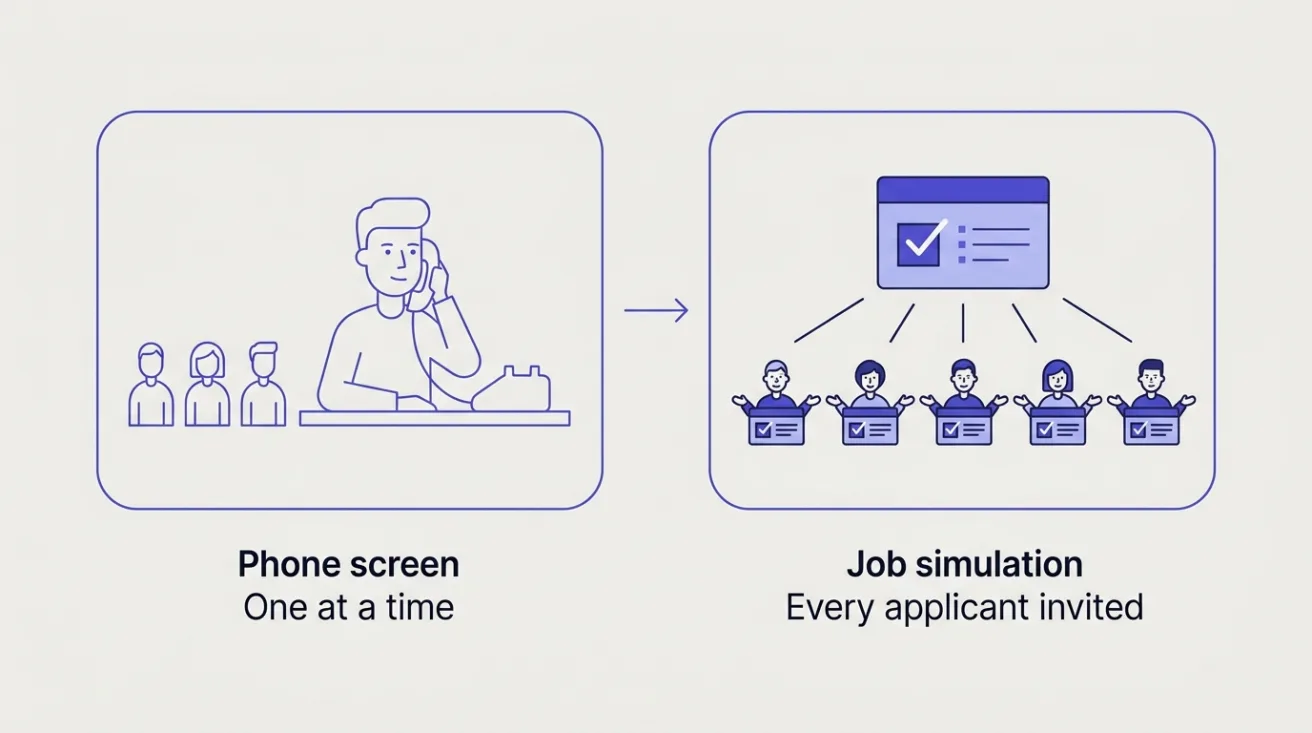
- A short job simulation in place of the phone screen removes a whole round of calls. Every applicant can be invited the day they apply, and the recruiter reads results instead of scheduling conversations. See job simulations for hiring for how this works.
- One-way video interviews let candidates answer set questions on their own time. They save scheduling time; see our explainer on one-way video interviewing.
Can an ATS help reduce time to hire?
Yes, mainly by removing manual steps: automatic stage moves, self-scheduling links, reminders to interviewers, and reports that show where candidates wait. An ATS will not fix a sourcing or decision problem on its own. Its reports are how you find out which problem you have. If you are choosing one, our guide to recruitment software for small businesses covers the basics.
Scheduling: when calendars are the problem
Coordinating interviews across candidates and several interviewers is pure waiting time, and it grows with every extra round.
- GoodTime is built with interview scheduling at its core, aimed at large corporate talent teams.
- Paradox offers a conversational assistant, Olivia, that automates routine tasks including scheduling, with use cases in retail, restaurant and frontline hiring.
- ATS scheduling: Workable offers self-service interview booking, and Ashby and Gem include scheduling in their platforms, so candidates can be sent times without a separate tool.
- General booking links are enough for small teams with one interviewer per stage.
Assessment: when evaluation is slow or inconsistent
Manual take-home tasks are often the slowest part of a process: sent late, completed over a weekend, reviewed when someone finds time, scored differently by each reviewer.
- Job simulation platforms generate or host a task from the role and return a score or grade for each candidate. Vendors here include Cohesyve, which publishes this list, Vervoe, WorkProbe and TaTiO.
- Coding assessment platforms are widely used for engineering roles. Our alternatives pages compare the main ones.
Speed comes from two things: inviting every candidate automatically at the right stage, and getting a scored result back without waiting for a reviewer. Our checklist for choosing an assessment platform covers what else to check.
Interviews: when decisions are slow
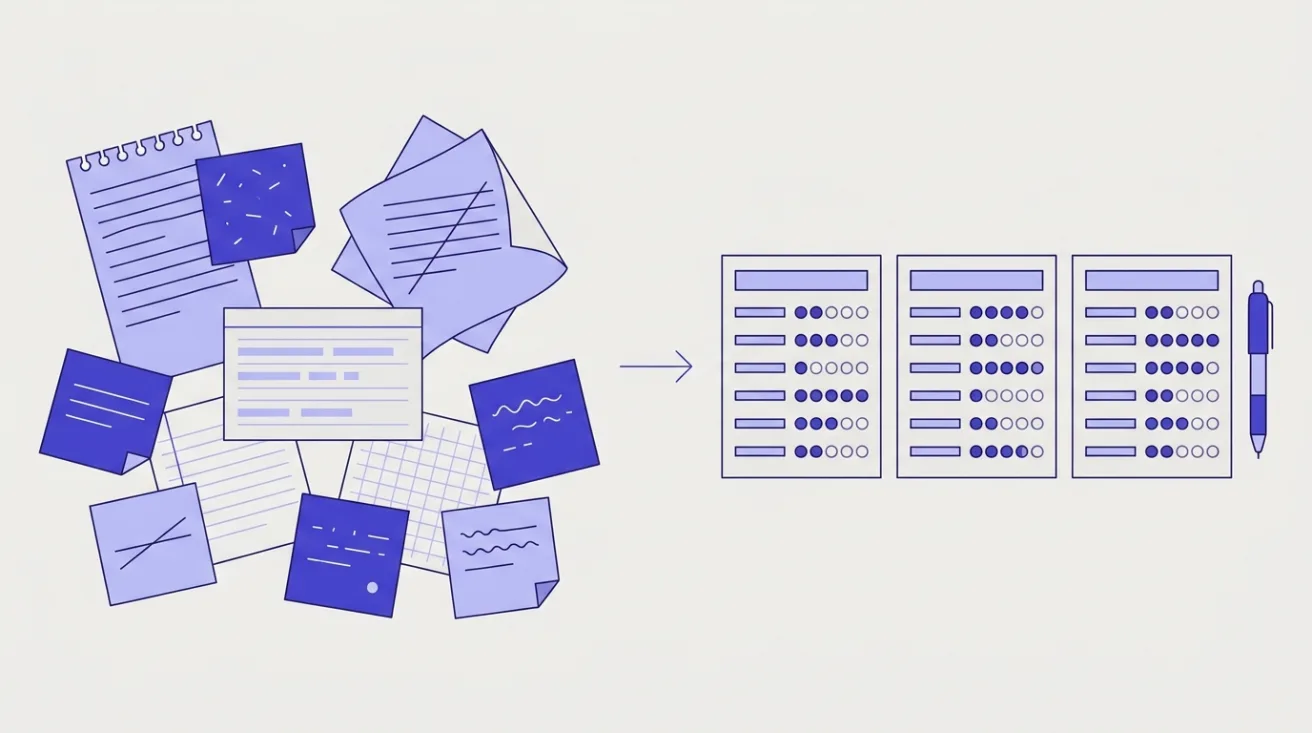
When interviews happen but decisions do not, the cause is usually unstructured feedback. Interviewers write notes in different formats, at different times, against different criteria, and the debrief becomes a negotiation.
- Structured scorecards, built into most ATSs, ask each interviewer to rate the same criteria before seeing others' feedback. Our free interview scorecard and structured interview guide are places to start.
- Interview note tools record and summarise interviews so feedback can be submitted straight after. Metaview, for example, includes interview notes among the capabilities of its recruiting platform.
- Fewer rounds. No tool beats removing an interview that repeats what an earlier stage already showed.
Offers: when the end drags
Once you have chosen someone, every extra day is a risk.
- Offer workflows in the ATS route approvals automatically and generate the letter from a template.
- E-signature removes printing, scanning and posting.
- Verification and background check providers such as Checkr, which describes itself as an AI-powered verification platform, can be triggered from the ATS when the offer goes out.
- Reference checks go faster with a set list of questions; see our reference check questions.
What tools help shorten time to fill for hard-to-hire roles?
For hard-to-fill roles the bottleneck is usually sourcing, so start with tools that widen and warm the pipeline: sourcing platforms, rediscovery of past applicants in your ATS, and outreach sequences that follow up reliably. Then make sure the strong candidates you find do not wait: invite them to a short evaluation the same day and keep the interview loop tight.
How can hiring teams reduce time to hire for technical positions?
Replace the recruiter screen with a short, role-specific technical task, run interviews against a structured rubric, and schedule the loop in one block. A strong engineer with other options in play is more likely to stay with a process that is quick and clearly relevant to the job. See how to assess system design or Python for role-specific examples.
How to tell whether a tool worked
- Pick one role and record its time to hire, stage by stage, for the last few hires.
- Introduce one tool at the stage it targets. Change nothing else.
- Compare the same stage-to-stage gaps for the next few hires.
- Check quality as well as speed: did the hiring manager accept the shortlist, and did the new hire pass probation?
A tool that shortens one stage but adds a step elsewhere, or makes the hires worse, has not reduced time to hire.
Common questions
What is the single best tool to reduce time to hire? There is no single best tool; it depends on the stage that is slow. Find the longest gap between your stages first; the tool aimed at that gap gives the largest gain.
Is time to hire the same as time to fill? No. Time to fill usually runs from when the role opens; time to hire from when the hired candidate entered the process. Sourcing tools affect time to fill most; screening, scheduling and decision tools affect both.
Can we reduce time to hire without new software? Often, yes. Feedback deadlines, fewer rounds and pre-booked interview slots cost nothing. The process guide covers these.
Will a faster process lower quality? Not if the time saved comes from waiting rather than evaluation. Removing calendar delays costs nothing in quality; removing the only real assessment of skill does.