When someone in hiring talks about "shortlisting," they’re referring to the process of creating a reduced list of qualified candidates from a much larger applicant pool. It’s the critical middle step between the initial flood of applications and the final, in-depth interviews. Done well, it ensures hiring managers only meet with people who have a strong potential to succeed in the role.
What Shortlisting Really Is in Hiring
Imagine you’re a film director holding a casting call. The first stack of applications is like hundreds of headshots—you cast a wide net hoping to attract talent. The first pass, known as screening, is a quick sort. You’re looking for the basics: do they have acting experience? Do they fit the general character type? It’s fast and practical.
But shortlisting? That’s where the real evaluation begins.
This is the moment the director invites a select group of actors for an audition. You’re no longer just looking for someone qualified; you're searching for someone with the potential to deliver a great performance. The goal shifts from simply weeding out the unqualified to hand-picking the best-aligned contenders.
This is the first truly strategic move you make in the hiring process. It's not just another box to check. A good shortlist digs deeper than just matching keywords on a resume; it starts to reveal the qualities that actually matter for the job.
A strong shortlist is a curated gallery of potential, not just a list of qualifications. It's the foundation for a smart hiring decision, saving everyone time and focusing your energy on candidates who could genuinely excel.
Why a Good Shortlist Is a Strategic Advantage
When you're thoughtful about building your shortlist, the benefits are felt throughout the entire hiring cycle.
It Increases Efficiency: Instead of conducting dozens of interviews, hiring managers can focus their energy on a handful of top-tier candidates. This respects everyone’s time—yours and theirs—and helps you reach a decision faster.
It Leads to Better Conversations: When you know everyone on your list is a strong contender, interviews can change. You can move beyond confirming qualifications and start having meaningful conversations about vision, team dynamics, and long-term potential.
It Helps Reduce Hiring Bias: A structured shortlisting process, built on clear, pre-defined criteria, is one of your best tools for mitigating unconscious bias. It encourages fairer, more objective decisions.
Ultimately, getting the meaning of shortlisting right is about recognizing its strategic importance. It sets the tone for everything that follows, making sure your final choice comes from a pool of excellence, not just a pool of adequacy.
Screening vs. Shortlisting: The Essential Difference
In hiring, people often use the terms “screening” and “shortlisting” interchangeably. But that’s a mistake. Confusing them can lead you to overlook great candidates or waste time on unsuitable ones.
Understanding what shortlisting is starts with seeing how it stands apart from its earlier, broader counterpart: screening.
Let's think of it like casting a movie.
Screening is the open casting call. You're just checking the basics. Does the actor have a headshot? Do they have any acting experience? It's a quick, yes/no process to filter out anyone who clearly doesn't meet the absolute minimum requirements. This is a game of elimination.
Shortlisting, on the other hand, is the callback. You've seen their initial materials, and now you're bringing back the most promising actors to read for the specific part. You're comparing them side-by-side, looking for chemistry, nuance, and the qualities that make them a good fit for the role. This is a game of selection.
This is where the process moves from a wide pool of applicants to a curated group of top contenders.
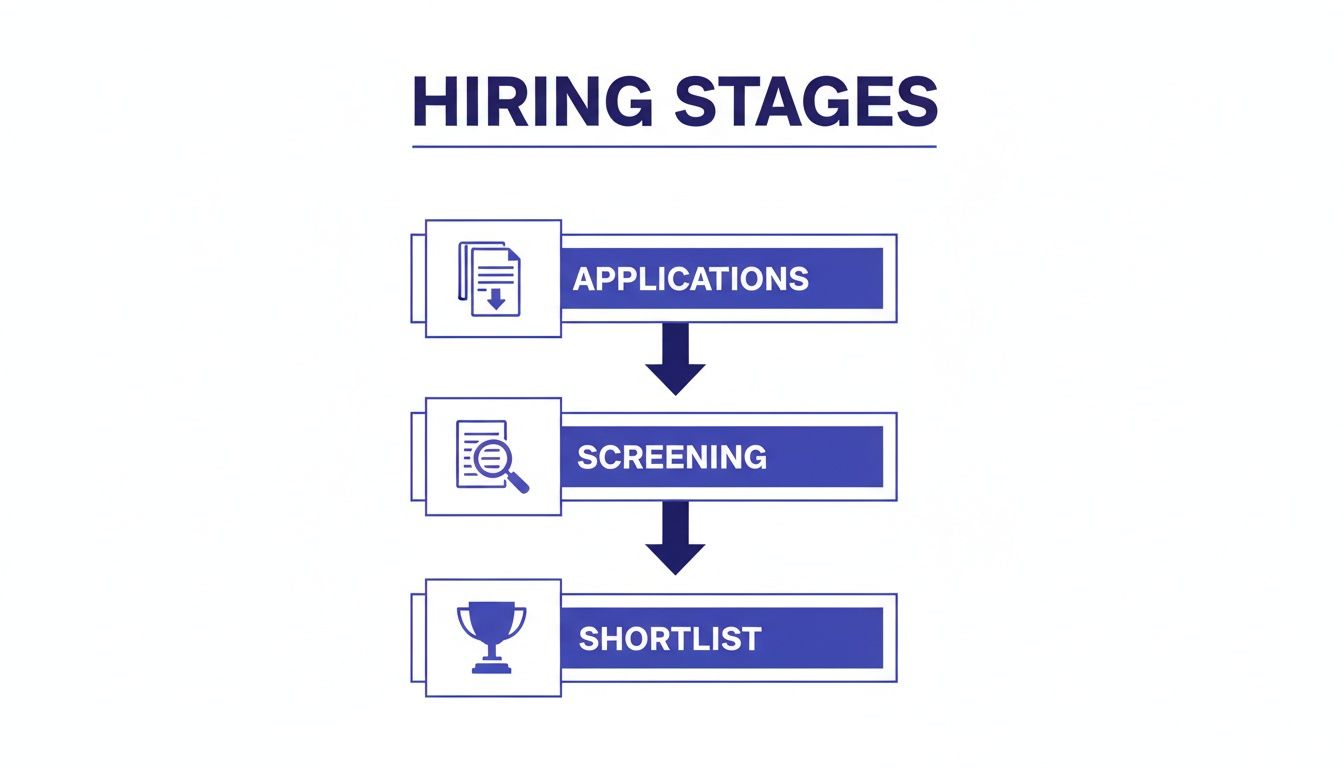
As you can see, screening cuts down the noise. But shortlisting is where you find the signal.
Hiring Funnel Stages Explained
To make this clear, let's break down how these two stages differ in their goals, methods, and outcomes.
| Stage | Primary Goal | Common Methods | Desired Outcome |
|---|---|---|---|
| Screening | To quickly filter out unqualified applicants | Resume reviews, ATS keyword matching, quick phone calls | A smaller, manageable pool of candidates who meet the basic job requirements. |
| Shortlisting | To identify the top candidates with the highest potential | In-depth review of portfolios, skills assessments, comparing top candidates | A curated list of 3-5 highly qualified individuals ready for in-depth interviews. |
Screening is about efficiency and handling volume. Shortlisting is where you apply your expertise and strategic thinking to build a list of finalists you’re genuinely interested in meeting.
One is a filter; the other is a spotlight. Screening asks, "Does this person meet the minimum qualifications?" Shortlisting asks, "Is this person a potential top performer for this specific team?"
Getting the screening part right is foundational. Sharpening your phone screening interview skills, for example, makes the shortlisting stage more effective. When you understand the distinction, you stop making snap judgments and start building a strong list of contenders.
Cohesyve
See what candidates can do before you interview them
Cohesyve turns your job description into a role-specific assessment with a scoring rubric. Each candidate gets a different version, so questions cannot be shared. Ten candidates free, no card.
The Art and Science of Crafting an Effective Shortlist
Building a great shortlist is a blend of objective science and informed art. It’s a critical moment where data-driven decisions meet human insight, not just to find qualified people, but to identify your next great team member. Think of it as assembling a team for a key project.

The "science" is your foundation. This involves creating a clear, consistent rubric based on the non-negotiables—the essential skills and must-have competencies from the job description. These are the baseline criteria a candidate needs to perform effectively.
But the "art" is what elevates a good shortlist to a great one. It’s the human element. It's the ability to look beyond resume bullet points to spot potential, recognize a strong cultural fit, or see how skills from a different industry could be an asset to your team. This is where you start to see who a person could become with your company.
Building a Balanced Shortlist
One common trap in recruiting is creating a list of nearly identical profiles. It feels safe, but it can stifle perspective and lead to groupthink. A more effective approach is to build a "balanced" list, intentionally curating a group with a variety of strengths.
This means you’re not just trying to hit a headcount; you’re thoughtfully shaping your final group. The ideal size for a shortlist is usually between three and seven candidates—enough for a meaningful comparison without overwhelming your hiring managers. Within that group, consider including a few different archetypes. You can explore more helpful shortlisting strategies on Vervoe.com.
An effective shortlist isn't about finding five clones of the "perfect" candidate. It’s about assembling a diverse slate of top contenders who offer different strengths, ensuring your final decision is a true strategic choice.
To put this into practice, aim for a mix like this on your list:
- The Direct Fit: This is the candidate who checks every technical box. They can start contributing on day one with minimal ramp-up time.
- The High-Potential Candidate: This person might lack a specific tool or one or two experiences, but they demonstrate an exceptional ability to learn, a strong drive, and solid foundational skills.
- The Wildcard: This is your most interesting candidate. They come from an unconventional background and bring a perspective or a rare skill combination that could challenge your team to think in new ways.
When you build a list this way, the final interviews are no longer just a box-checking exercise. They become a dynamic, strategic conversation about the future, allowing you to weigh immediate productivity against long-term growth and ultimately build a more resilient and innovative team.
Common Shortlisting Mistakes and How to Avoid Them
Even with the best intentions, the shortlisting stage is where a hiring process can quietly go off track. This is the moment when subtle, unconscious biases often appear, guiding us toward what feels familiar instead of what’s genuinely best for the role.
Recognizing these mental shortcuts is the first step toward building a more equitable process.
Two of the biggest culprits are affinity bias and the halo effect. Affinity bias is the natural pull we feel toward people who remind us of ourselves—perhaps they attended the same university or share a similar background. The halo effect is when one positive detail, like experience at a big-name company, makes us overlook potential red flags elsewhere in their profile.
Recognizing Bias in Action
These biases are not just theoretical; they lead to real-world hiring mistakes. A team might dismiss a qualified candidate from a smaller company simply because they’re impressed by an applicant from a famous competitor, even if that person is less suitable for the role. It’s not a deliberate act of unfairness—it’s the halo effect making the big brand name feel like a safer choice.
This is where the real work of shortlisting happens. It’s not just about finding people who can do the job; it’s about making sure every qualified person gets a fair evaluation. To build a more resilient and equitable hiring system, you can dive into these talent acquisition best practices for deeper insights.
True objectivity in hiring isn't about eliminating human judgment—it's about giving that judgment a structured, fair framework to operate within. This ensures you're comparing candidates based on consistent criteria, not just gut feelings.
Actionable Ways to Improve Fairness
Fortunately, you don’t need a massive overhaul to combat bias. A few simple, effective guardrails can keep your shortlisting process on track and focused on what truly matters.
Use a Structured Scorecard: Before you look at the first application, create a simple evaluation sheet with the same 3-5 key criteria for every candidate. This encourages reviewers to judge everyone against the same objective measures, moving beyond vague impressions.
Involve a Diverse Panel: Don’t leave shortlisting to just one person. Have a small, diverse group of people review the top applicants independently before they discuss them as a team. Bringing different perspectives to the table is a natural and effective way to challenge individual biases and create a more balanced shortlist.
Moving Beyond Resumes to Shortlist for Real Skills
A resume is a summary of the past, not a guarantee of future performance. It’s an advertisement, crafted by the candidate. If that’s all you’re relying on, you’re judging someone's potential based on how well they can write a document, not how well they can actually do the job.
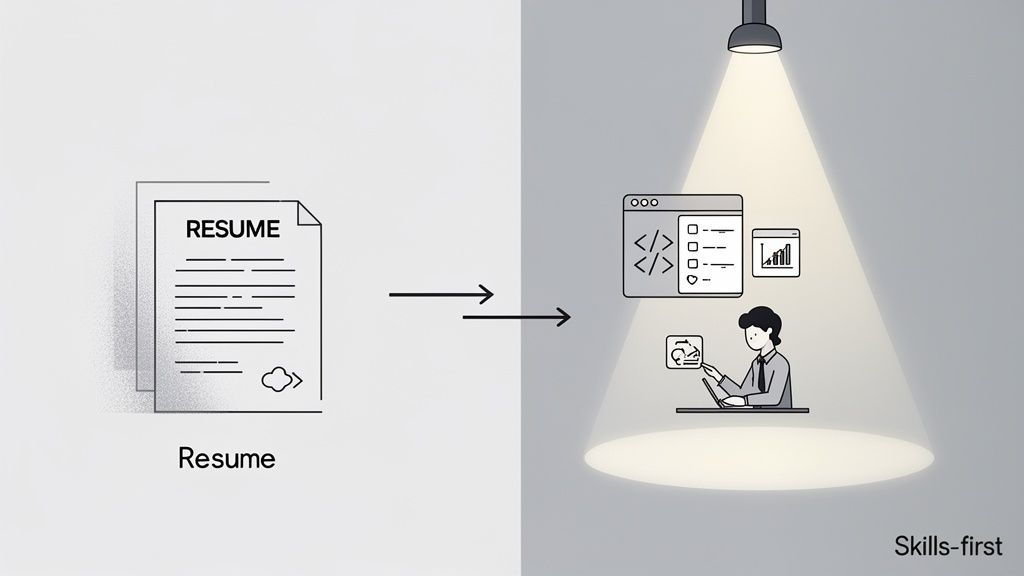
But what if you could change the approach? Imagine building your shortlist on verified ability instead of polished keywords. This is the core of a modern, skills-first hiring strategy. It’s a simple but meaningful shift from what candidates say they’ve done to what they can actually do.
Seeing Skills in Action
The key is to use brief, role-specific assessments before the interview stage. Think of it as a practical work sample that gives you objective data to build your shortlist. These aren't long, generic exams; they're tailored tasks that mirror the actual work someone would be doing.
Here are a few examples:
- For a Software Developer: Give them a small, timed coding challenge that shows you how they approach and solve problems.
- For a Marketing Manager: Ask them to outline a launch strategy for a new product in a mini case study.
- For a Customer Support Lead: Present a scenario where they have to de-escalate a tough customer issue.
This approach shows how candidates truly think, communicate, and perform in a context that actually matters. It’s how you find those capable people with unconventional backgrounds who possess the exact skills you need. When you use a well-designed pre-employment skills assessment, you're adding a layer of objectivity to your entire process.
By verifying skills upfront, you build a shortlist with a different level of confidence. You're no longer just guessing who the top performers might be—you have data to support your decisions.
This shift in focus does more than just improve quality; it can also widen your talent pool. According to Serendi, a skills-based hiring approach can expand global talent pools by 6.1 times, and by 8.2 times for AI roles. It's a useful way to find hidden gems who are often missed by traditional resume screening. You can find more on the impact of skills-based hiring on serendi.com.
Ultimately, shortlisting for real skills transforms you from a resume historian into a talent scout. You stop reading about past achievements and start seeing future potential in action, which sets the stage for a smarter, more confident hiring decision.
Your Shortlisting Questions, Answered
Still have a few questions about what shortlisting really means and how to do it in practice? Let’s clear up some of the common sticking points so you can move forward with confidence.
Think of this as the final piece of the puzzle, giving you the practical insights you need to build a hiring process that consistently brings the best talent to the forefront.
How Long Should the Shortlisting Process Take?
In hiring, timeliness matters. While the exact timeline can shift depending on the role's complexity, a good rule of thumb is to have your final shortlist ready within 3-5 business days after applications close.
Why is this important? The best candidates often receive multiple offers. A slow, indecisive shortlisting stage is a common way to lose qualified people to competitors who move faster. Treat it with a sense of urgency.
The most sought-after candidates are not on the market for long. A swift, organized shortlisting process shows them you’re serious and that you respect their time—a strong first impression to make.
What Tools Can Help Improve My Shortlisting?
Your Applicant Tracking System (ATS) is a workhorse for the initial screening, helping you manage the volume of applications and filter by basic qualifications. But when it's time to truly shortlist—to find the best of the qualified—you need more than a resume parser. This is where skills assessment platforms can be valuable.
These tools provide objective data to help you make decisions with more confidence. They let you see beyond a well-written resume and evaluate how a candidate actually performs on tasks they'd do in the role. This allows you to build a shortlist based on demonstrated ability, not just claims, and uncover qualified candidates you might have otherwise missed.
Should I Inform Candidates Who Are Not Shortlisted?
Yes, absolutely. It’s important for building a strong employer brand. A simple, respectful, and timely email makes a difference and helps ensure a positive candidate experience, even for those who didn't make the cut.
It’s a small effort that can leave a lasting impression. That person might be a good fit for a different role down the line, or they might recommend your company to talented people in their network. It's an act of courtesy that benefits your reputation.
At Cohesyve, we believe that verifying skills should be at the heart of hiring. Our AI-driven platform helps you move from resume guesswork to skill verification, allowing you to identify top candidates who have demonstrated they can do the job. Discover a faster, fairer way to hire at https://www.cohesyve.com.