Imagine hiring a chef based on their recipe book. You see the ingredients and instructions, but you have no idea if they can actually cook. For decades, that’s how many companies have hired—relying on a resume, a two-page summary of past ingredients, to predict future success.
A virtual job tryout offers a different approach. It's less of an application and more of a "test drive." Instead of just telling you what they can do, candidates get to show you through a short, interactive simulation of the actual job.
Beyond the Resume: A New Way to See Talent
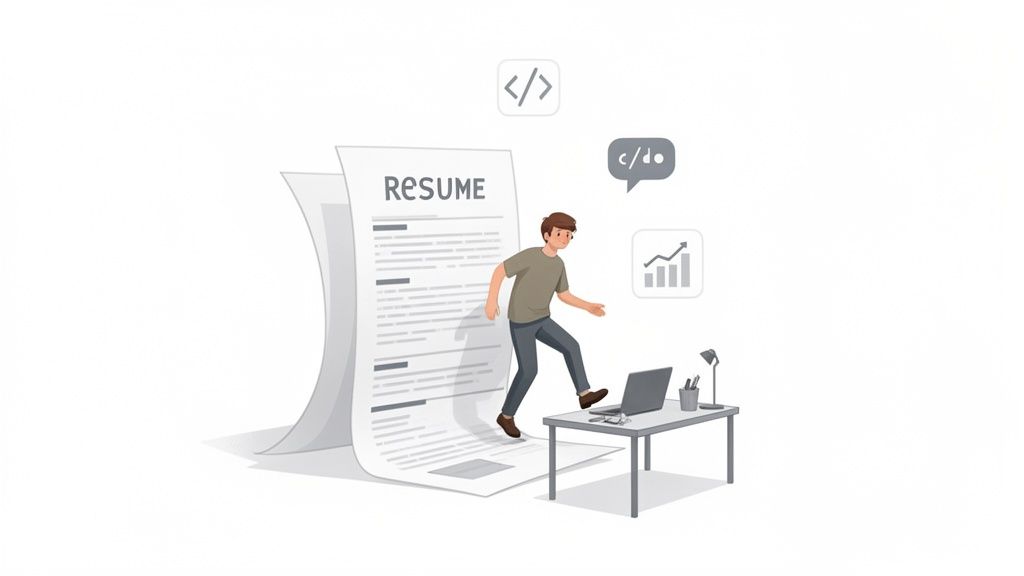
Resumes can be useful, but they have their limits. They’re a highlight reel, polished and perfected, but they may not reveal how someone thinks on their feet, tackles a tough problem, or collaborates with a team. A skilled resume writer isn't always a skilled employee.
This is why the move to virtual job tryouts is gaining traction. It’s a shift in philosophy. We stop asking, "What does your resume say?" and start asking, "What can you actually do?" This simple change can provide a genuine glimpse into a candidate's capabilities.
The core idea of a virtual job tryout is moving talent evaluation from the theoretical to the practical. You're no longer just listening to interview answers; you're observing skills in action.
From Guesswork to Concrete Evidence
You wouldn't buy a car without taking it for a spin. So why do we often make one of our most important decisions—hiring a new team member—based on a piece of paper and a 45-minute chat? The cost of a bad hire can be significant, not just financially, but in its impact on team culture and morale.
A virtual job tryout provides concrete evidence. It’s a fair, objective way for every candidate to demonstrate their skills, regardless of how well their resume is optimized with keywords.
This skills-first approach is becoming more common. The global online recruitment market was valued at USD 35.45 billion in 2024 and is projected to grow to USD 65.72 billion by 2033. Much of this growth is driven by assessment tools that help reduce bias and automate administrative tasks, potentially saving recruiters significant time. This allows them to focus on engaging with qualified candidates who have already demonstrated they can do the job. You can look into these hiring trends and statistics for more context on this shift.
To understand the difference, let’s compare the traditional way with this newer approach.
Comparing Traditional Hiring and Virtual Job Tryouts
| Aspect | Traditional Hiring Process | Virtual Job Tryout Approach |
|---|---|---|
| Primary Focus | Past experience, keywords, and credentials listed on a resume. | Demonstrated skills and future potential shown through real tasks. |
| Candidate Experience | Often passive. Candidates apply and wait for a response. | Engaging and interactive. Candidates get a feel for the role. |
| Decision-Making Basis | Subjective impressions from interviews and resume interpretation. | Objective data on performance, problem-solving, and skills. |
| Predictive Accuracy | Can be low. Resume quality may not correlate with job performance. | Often higher. Stronger link between tryout success and on-the-job success. |
| Inclusivity & Bias | Prone to unconscious bias based on names, schools, or background. | Fair and equitable. Everyone gets the same chance to prove their ability. |
This side-by-side view illustrates how virtual job tryouts can provide a more reliable foundation for making hiring decisions.
A Clearer Picture for Everyone
This isn't just a benefit for companies. It's a benefit for candidates, too.
They get a realistic preview of the day-to-day work, helping them decide if the role genuinely aligns with their skills and interests. This transparency builds trust from day one and can lead to better-aligned hires who are happier, more engaged, and more likely to stay. It turns hiring from a one-way evaluation into a two-way street of mutual discovery.
How a Virtual Job Tryout Actually Works
Let's use an analogy. Imagine you're hiring a pilot. Would you hire them based on an interview alone, or would you want to see them in a flight simulator first? A virtual job tryout is that flight simulator for your open role. It lets you see a candidate in action before they join the team.
Instead of just talking about what they would do, candidates engage with real-world tasks. They’re not just answering multiple-choice questions; they’re actually doing the work. This could mean debugging a line of code, responding to a customer in a simulated chat, or building a financial model from a spreadsheet. It's all about moving from theory to practice.
The process often starts with a brief simulation that captures a "day-in-the-life" moment of the job. For a sales role, they might be put in a scenario where they have to craft an email to a prospect. For an operations manager, perhaps they need to re-route a supply chain shipment after an unexpected disruption. It’s practical, it’s relevant, and it’s informative.
The Technology Behind It
How do these experiences feel so tailored to each role? Often, the answer is AI. Many modern platforms can analyze a job description and generate a simulation that tests for the most critical skills. This avoids pulling from a generic library of questions.
This is a significant step forward. When a system can create a unique set of challenges for each person, you get a more equitable and cheat-proof assessment. Think of it like a professor giving every student a slightly different version of the final exam. You’re testing for genuine capability, not just memorization or the ability to search for answers.
At its heart, the idea is simple: one of the best predictors of future performance is current performance on a relevant task. Virtual tryouts give every candidate a fair shot to prove their skills, leveling the playing field.
These simulations are built to evaluate a range of abilities at once. In a single challenge, you can get a read on a candidate's:
- Hard Skills: Can they code efficiently? Is their financial model accurate?
- Soft Skills: How do they communicate under pressure? What’s their judgment like?
- Problem-Solving: What's their process when they face an unfamiliar problem?
From Candidate Action to Hiring Insight
Once a candidate finishes the tryout, the platform’s work is just beginning. It’s not just about a pass/fail grade. It’s analyzing the how and the why behind their actions. For a developer, it might look at the efficiency of their code, not just if it works. For a customer support role, it could analyze their tone, empathy, and speed.
This data is then packaged into a simple report for the hiring manager. Suddenly, instead of a mountain of resumes with self-reported skills, you have a ranked list of people who have demonstrated they can do the job.
This data-driven approach helps mitigate the unconscious bias and "gut feelings" that can cloud hiring decisions. The conversation shifts from "I have a good feeling about this person" to "Here is objective evidence of their capabilities." The goal isn’t to replace human connection, but to support it with data-backed insights. It allows your team to focus their time on the best-fit candidates, leading to smarter, faster, and fairer hiring.
Cohesyve
See what candidates can do before you interview them
Cohesyve turns your job description into a role-specific assessment with a scoring rubric. Each candidate gets a different version, so questions cannot be shared. Ten candidates free, no card.
The Strategic Advantage of Skills-Based Vetting
Moving past traditional resume screening is becoming a strategic choice for many companies. In a world where specialized skills and remote work are common, relying on old signals can be limiting. A virtual job tryout provides modern, data-driven accuracy.
This approach aligns with major trends shaping how we work. As teams become more distributed, companies need a reliable way to assess talent from anywhere. The numbers tell a compelling story: remote jobs make up only 8% of U.S. LinkedIn postings but attract 35% of all applications. This volume makes effective, scalable filtering essential.
On top of that, research indicates that offering hybrid work can lower quit rates without a drop in performance, proving the value of finding committed people for these flexible roles.
Cutting Through the Noise to Find Quality
One of the most immediate benefits of skills-based vetting is gaining both speed and precision. Instead of manually sifting through hundreds of similar resumes, a virtual job tryout automates the initial screening, letting you spot the candidates who can actually do the work.
This is a significant efficiency boost. Companies that adopt this method often reduce their time-to-hire. In practical terms, this means critical roles get filled faster, projects stay on schedule, and your hiring team can focus on more strategic tasks.
Fostering an Inclusive Culture
Another key benefit is the positive impact on diversity and inclusion. Resumes, whether we intend it or not, can trigger unconscious biases based on a candidate's name, school, or past employers. A virtual job tryout can sidestep many of those pitfalls.
When every candidate tackles the same real-world challenge, the playing field is leveled. Success comes down to skill and potential, not where they went to school or how well they wrote their resume. This is the foundation of a merit-based system.
By focusing on what people can accomplish, you open the doors to talented individuals who might have been overlooked by traditional methods. It’s a powerful way to build a team that reflects a variety of experiences and perspectives. You can dive deeper into this idea in our guide on what is skills-based hiring.
This visual shows how a virtual job tryout works in three clear steps.
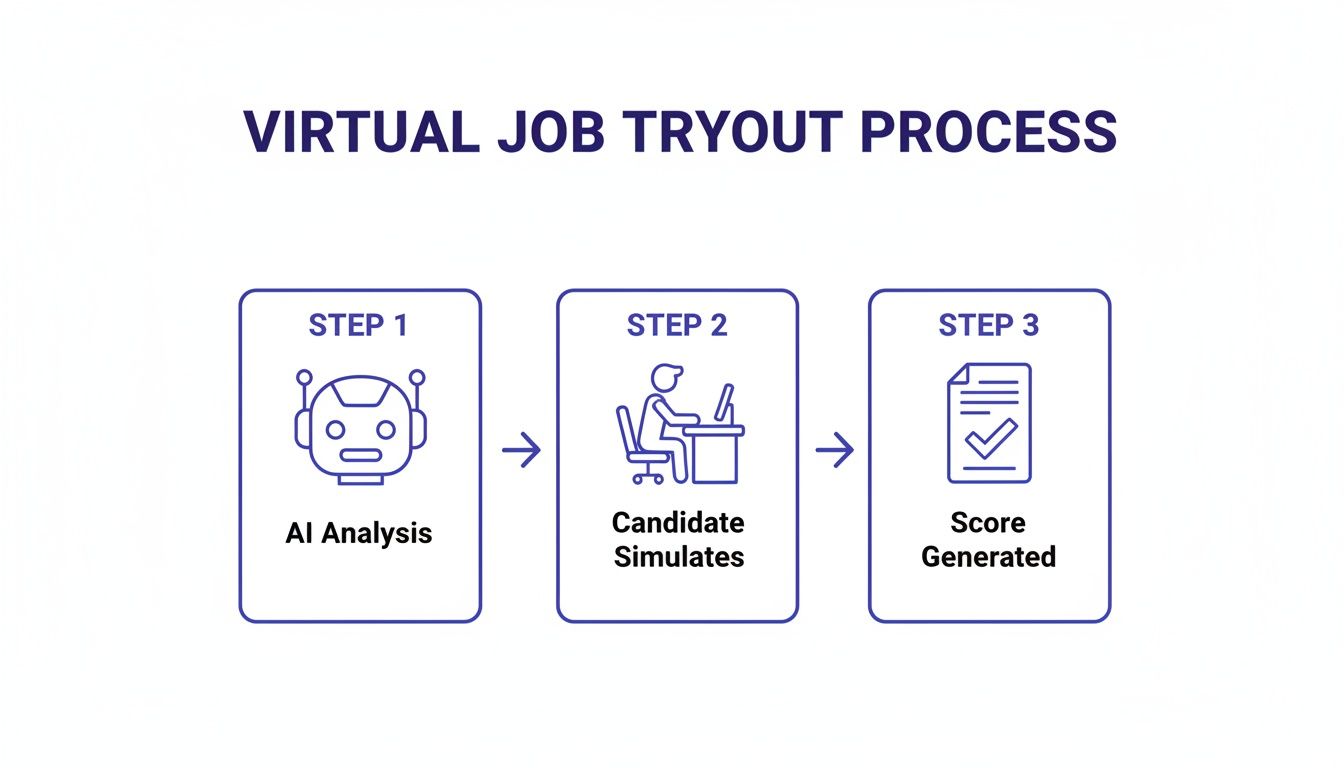
The process highlights how technology can create a fair and efficient evaluation—first by understanding the role, then by seeing a candidate in action, and finally by delivering clear, objective scores.
Reducing the High Cost of a Bad Hire
A bad hire is one of the most expensive mistakes a company can make. The cost goes beyond salary, including wasted training time, lost productivity, and the negative effect on team morale.
A virtual job tryout can be an effective insurance policy against that risk. By giving candidates a realistic taste of the job, it creates a much better match from day one.
- For the Company: You get a reliable preview of how someone will perform on the job before you extend an offer.
- For the Candidate: They get a genuine feel for the day-to-day work, letting them opt out if it’s not the right fit.
This two-way transparency is valuable. When expectations meet reality, new hires are more likely to be engaged, productive, and stay for the long term. With modern platforms seeing candidate completion rates over 95%, it's clear this approach is well-received. It respects everyone's time while giving you the confidence to build a strong team.
Seeing Virtual Job Tryouts in Action
Theory is one thing, but seeing these tryouts in practice is where the concept clicks. The value of a virtual job tryout isn't in a generic test; it's in creating a miniature, true-to-life snapshot of the actual job.
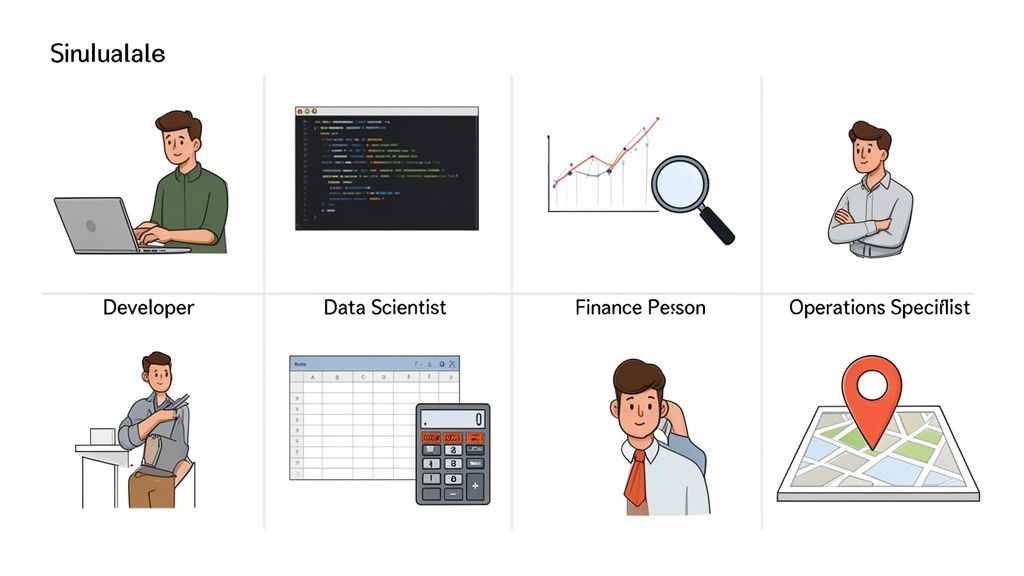
Let’s look at how this plays out for four different roles. This is where we move beyond, "Tell me about a time when..." to the more revealing, "Show me how you'd handle this... right now."
The Software Engineer Challenge
A software engineer’s resume can list a dozen programming languages, but that doesn't tell you how they think or build. What if you gave them a real-world scenario? Imagine putting them in a simulated coding environment with a buggy piece of code that’s slowing down a core application.
Their mission is more than just "fix the bug." The simulation can observe much more:
- How do they approach the problem? Do they start writing code immediately, or do they take a moment to diagnose the root cause?
- What does their solution look like? Is it a clean, scalable fix, or a quick patch that might create problems later?
- Can they communicate? You could ask them to comment their code or write a summary of their fix, giving you a peek into how they’d collaborate with the team.
This way, you’re not just testing their knowledge; you’re seeing their problem-solving process and craftsmanship in action.
The Data Scientist Deep Dive
A great data scientist doesn't just run models—they find the story hidden in the data. For their tryout, you might give them a messy, anonymized dataset reflecting a business challenge, like figuring out why customers are leaving.
Instead of a quiz on algorithms, their task could be to clean the data, identify trends, and build a simple predictive model. The final step? Summarize their findings in plain language, as if explaining it to a non-technical stakeholder. This one exercise can show you their technical skills, analytical judgment, and ability to turn raw data into a business strategy.
The Financial Analyst Forecast
When hiring for finance, you need someone with strong attention to detail and an analytical mind. A virtual tryout for a financial analyst could provide them with a set of realistic financial statements from a fictional company.
The goal isn't just to see if they can crunch numbers. The simulation is designed to test their judgment and how they connect financial data to a broader business strategy.
You could ask them to build a basic financial model forecasting the next year’s performance. This isn't just a pass/fail math test. It's evaluating:
- Technical Precision: Are their formulas sound? Are their assumptions logical?
- Strategic Insight: Can they look at their forecast and spot potential risks or opportunities?
- Attention to Detail: Did they catch the subtle inconsistencies you intentionally planted in the source data?
This provides a deeper insight into their thinking than just asking about their Excel skills ever could.
The Operations Specialist Scenario
Operations is all about solving logistical puzzles under pressure. For an operations specialist, the tryout might be an interactive simulation where a critical supply chain shipment is suddenly disrupted.
The candidate gets a dashboard showing limited resources, different shipping options with their own costs and timelines, and incoming messages from stakeholders. They have to weigh the trade-offs, make a decision, and communicate their plan. This directly tests their ability to prioritize, think on their feet, and communicate clearly—the exact skills a resume can only hint at.
In every case, a well-designed virtual job tryout cuts through the noise and gives you what you need: direct evidence of a candidate's ability to do the job.
How to Implement a Virtual Job Tryout Program

Moving to a skills-first hiring model might seem like a large undertaking, but rolling out a virtual job tryout is more achievable than you might think. With a clear plan, you can stop guessing about a candidate's potential and start seeing it for yourself. A good approach is to start small, build momentum, and let the results speak for themselves.
Think of it less as a complete overhaul of your hiring process and more as a targeted upgrade. You're adding a component that can make the entire system run with more efficiency and accuracy. It all starts with one question: what skills truly drive success in this role?
Identify Core Role Competencies
Before you can build a useful simulation, you have to know what you're measuring. Look past the long list on the job description and zero in on the 3-5 essential skills that separate good candidates from great ones.
For a software engineer, that might be diagnosing complex bugs and writing efficient code. For a salesperson, it could be handling objections and articulating your product's value.
Once you’ve identified those core competencies, you can design a tryout that puts them to the test. This focused approach is what makes the assessment relevant and a strong predictor of how someone will perform on the job.
Choose the Right Simulation Format
With your essential skills defined, the next step is to pick a format that lets candidates show you what they've got in an authentic way. The best virtual job tryouts feel like a slice of the real work, so avoid generic quizzes or abstract brain teasers.
- For technical roles: A hands-on coding challenge in a simulated development environment is effective.
- For client-facing roles: A voice or video role-play can be a great way to evaluate communication and empathy.
- For analytical roles: An interactive case study or a data analysis task can provide a window into their thought process.
The goal is to create an experience that feels less like a test and more like their first day on the job. This not only gives you better data but also gives candidates a realistic preview that helps them decide if the role is truly for them.
Integrate and Communicate with Care
New technology should make your job easier. Ensure that whatever platform you choose integrates smoothly with your Applicant Tracking System (ATS). A good connection eliminates manual data entry and keeps your candidate pipeline flowing.
Just as important is how you introduce this to your candidates. Be clear about what the tryout involves, why you're using it, and what they can expect. Transparency builds trust and turns an assessment into a more positive and engaging experience. This kind of communication is fundamental to improving the candidate experience and protecting your employer brand.
Launch a Pilot Program
Instead of a company-wide rollout, consider starting with a pilot program for one or two critical or hard-to-fill roles. This gives you the space to test the process, gather feedback, and build an internal case study. Keep a close eye on metrics like time-to-hire, quality of hire, and hiring manager satisfaction.
This targeted approach is becoming more common. After all, a bad hire is costly, and technologies like AI-driven video interviewing are projected to be the leading segment of the online recruitment technology market. You can learn more about the growth of online recruitment technology.
Imagine presenting to your leadership team how your pilot program filled a key position 50% faster with a candidate everyone is excited about. When you have that kind of proof, expanding the program becomes a logical next step.
Choosing the Right Assessment Platform
Picking the right partner to bring your virtual job tryouts to life is a critical decision. With many tools available, it’s easy to get distracted by long feature lists. The key is to look past the marketing and focus on the core capabilities that deliver fair, accurate, and engaging assessments.
You’re not just buying a testing tool; you need a platform that empowers you to build simulations that genuinely feel like a day in the life of the role. A great platform gives you the building blocks to see candidates in their element.
Customization and Role-Specific Design
The most effective virtual job tryouts aren't generic. Look for a platform that lets you create custom, role-specific assessments. A high standard today is technology that can analyze your job description and automatically design a relevant simulation from it.
This ensures each tryout is a precise mirror of the job's real-world demands. It's a significant improvement over one-size-fits-all tests. Instead, you get to measure the specific competencies that predict on-the-job success, which gives you more reliable insights into what a candidate can do.
Dynamic Questions and Assessment Integrity
In a world where candidates can find information online, static question banks can be a liability. A platform that generates unique, dynamic questions for every candidate is essential for protecting the integrity of your hiring process.
This dynamic approach means you're measuring genuine skill, not just how well someone can search for answers. It creates a level playing field where every person gets a fair and equivalent chance to show their potential, making the assessment difficult to cheat. If you're weighing your options, our guide on pre-employment assessment tools breaks down what to look for.
Key Features for a Modern Platform
As you compare solutions, keep this checklist handy. These features separate a modern, effective platform from the rest of the pack.
- Seamless ATS Integration: Your new tool must work with your existing Applicant Tracking System to avoid creating data silos and administrative work.
- A Positive Candidate Experience: The interface should be intuitive, clean, and engaging. Look for platforms that gather candidate feedback and have high completion rates—often above 95%.
- Multilingual Support: If you hire globally, delivering assessments in a candidate's native language is crucial for fairness and creating a positive experience.
- Transparent Pricing: Complicated subscription models with hidden fees can be problematic. A pay-as-you-go or a clear, per-assessment pricing structure gives you the freedom to scale without a long-term contract.
Choosing a platform is about finding a partner that shares your hiring philosophy. The right tool won't just test skills; it will help you build a stronger, more capable team by revealing talented candidates you might have otherwise missed.
Ultimately, the best platform combines sophisticated technology with a simple, human-centric approach. It should give you the data you need to make confident decisions while treating every candidate with respect.
Your Questions Answered: Getting Started with Virtual Job Tryouts
When you're thinking about changing your hiring process, questions are a good thing. Moving to a skills-first approach with a virtual job tryout is an important change, and it’s smart to understand the details. Let's address some of the most common questions.
What Does This Feel Like for a Candidate?
When done right, it can be a positive experience. Many candidates are tired of only telling you what they can do; they appreciate the opportunity to show you. A well-designed tryout gives them that chance.
It comes across as more transparent and fair, which can build goodwill. Plus, it’s a two-way street—they get a genuine preview of the job, helping them decide if it’s the right move for them. This is reflected in the data, with completion rates on modern platforms often exceeding 95%, which suggests candidates find value in the experience.
Are These Only for Coders and Tech Roles?
No, not at all. While coding challenges are a well-known example, this approach can be tailored to almost any role. The key is to build a simulation that reflects the day-to-day challenges of the job.
Consider these examples:
- For a sales role, you could use a voice role-play to see how they handle customer objections.
- A marketing candidate might be asked to draft a creative brief for a new campaign.
- Someone in consulting or finance could tackle an interactive case study that tests their analytical skills.
How Do You Keep Things Fair and Unbiased?
This is where virtual job tryouts have a distinct advantage. They are fundamentally more objective than reviewing a resume, a process vulnerable to unconscious bias. By having every candidate tackle the same standardized, job-related tasks, you’re measuring everyone against the same yardstick: performance.
The best platforms take this a step further by generating unique assessments for every candidate. This not only prevents cheating but also ensures you’re seeing their authentic skills in action.
When you focus on what people can actually do, you naturally create a more equitable and merit-based hiring process. It levels the playing field and gives every talented person an equal shot to prove their worth.
Ready to stop guessing and start seeing what your candidates can do? At Cohesyve, we help you build a stronger team by verifying skills with custom, AI-powered assessments. See how our dynamic virtual job tryouts can help you hire with confidence at https://www.cohesyve.com.