A bad hire is expensive, and many organizations don’t get there because of one disastrous decision. They get there through a pile of small, familiar mistakes. Resume assumptions. Free-form interviews. Different interviewers asking different questions. Strong talkers getting overrated. Quiet builders getting missed.
That’s why structured interviews work. They replace improvisation with evidence.
The research base is strong. Meta-analytic research consistently finds higher predictive validity for structured interviews than for unstructured ones. In plain English, a structured process is much better at predicting who will perform.
That matters whether you’re hiring a recruiter, a controller, a software engineer, or a data scientist. You need more than a pleasant conversation. You need a repeatable way to test judgment, skills, communication, and fit for the actual job.
If you're already thinking about a broader what is behavioral assessment approach, structured interviews are one of the most practical places to start. They’re easy to tighten up, they create better comparison data, and they make debriefs far less political.
Below are structured interview questions examples I’d use. Each category includes sample questions, what strong answers look like, and how to score them without turning your hiring process into bureaucracy.
1. Behavioral Questions Using the STAR Method
Behavioral questions still earn their place when they’re done properly. The mistake is using generic prompts, then accepting polished but empty answers.
The better version is targeted, job-linked, and scored in advance. The U.S. Office of Personnel Management guidance, summarized by DataPeople’s structured interview article, emphasizes behavioral questions because past behavior predicts future job performance more accurately than hypothetical questions.
Questions that pull out real evidence
For a software engineer, ask:
- Problem solving: “Tell me about a time you fixed a production issue under pressure.”
- Collaboration: “Tell me about a time you disagreed with product or design and had to move forward.”
- Learning speed: “Tell me about a time you had to learn a tool or system quickly to deliver.”
For a manager, ask:
- Feedback handling: “Tell me about a time you gave difficult feedback that improved performance.”
- Prioritization: “Tell me about a time multiple urgent priorities landed at once.”
- Accountability: “Tell me about a time a project went off track and you had to reset expectations.”
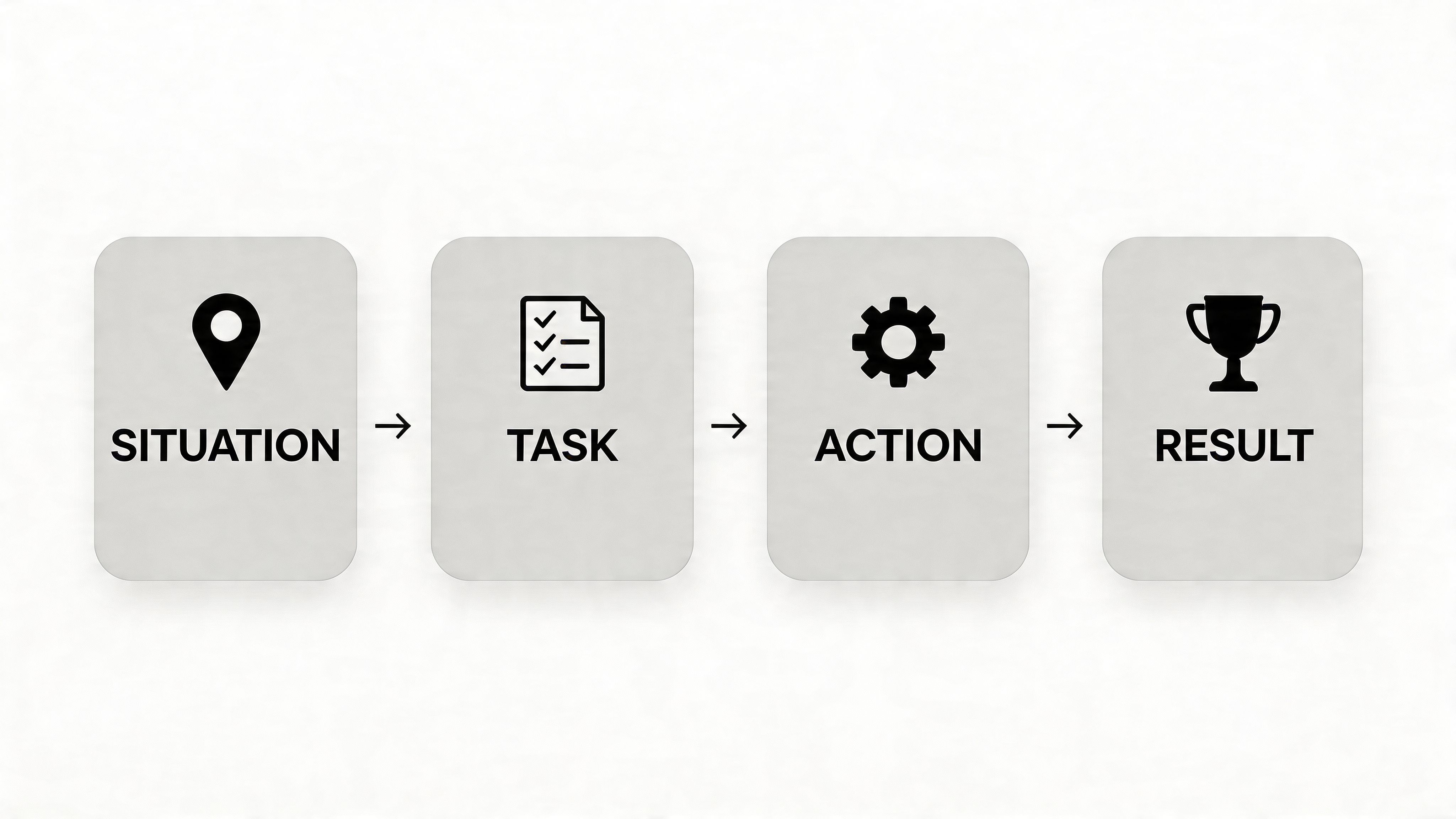
The STAR frame helps, but don’t let candidates hide behind it. A usable answer includes context, a clear personal contribution, a decision, and an outcome. If any of those pieces are missing, you don’t yet have evidence.
Practical rule: If the candidate says “we” for most of the answer, ask “what was your part specifically?”
A simple scoring rubric
Use a 1 to 5 rubric before interviews start.
- 1, weak evidence: Vague example, unclear role, no result
- 3, solid evidence: Specific situation, clear action, reasonable judgment
- 5, strong evidence: Specific example, clear ownership, thoughtful trade-offs, reflection on what changed afterward
What works is depth, not volume. Yardstick recommends 3 to 4 high-quality behavioral questions, with 10 to 15 minutes per question. That’s enough time to probe for judgment instead of racing through a script.
What doesn’t work is asking ten soft questions in twenty minutes and pretending you learned something.
Pair STAR questions with another verification step. If someone says they improved analytics decision-making, follow with a short data exercise. If they claim they led through conflict, ask how they’d handle a live scenario. The strongest structured interview questions examples don’t stop at stories. They test the story.
2. Technical Problem-Solving Questions with Real Coding Challenges
For technical roles, talk is cheap. Candidates know the common prompts. They’ve seen the question banks. Some have rehearsed model answers so many times they sound better in the interview than they do on the job.
That’s why I prefer practical challenges over trivia.
What to ask instead of theory questions
A backend engineer shouldn’t spend half an hour defining terms. Give them a small service design problem. Ask them to debug a realistic issue. Let them explain trade-offs.
Useful prompts look like this:
- Debugging: “This API endpoint is timing out under load. Walk through how you’d investigate.”
- Design: “Design a notification service that supports retries, rate limits, and basic observability.”
- Code review: “Here’s a function that works but is hard to maintain. What would you change and why?”
For data roles:
- SQL reasoning: “Write a query to calculate weekly active users from this schema.”
- Experiment judgment: “An A/B test shows a lift, but the sample is skewed. How would you decide whether to trust it?”
- Data cleaning: “This dashboard has inconsistent totals. Walk through what you’d inspect first.”
If you need role-specific prompt ideas, this collection of software engineer interview questions is a useful reference point.
How to score technical work fairly
Keep the rubric visible to interviewers before the session starts.
- Correctness: Did they solve the core problem?
- Reasoning: Did they explain decisions clearly?
- Edge cases: Did they identify failure points or missing assumptions?
- Code quality or structure: Is the solution maintainable?
- Communication: Could a teammate follow their thinking?
Indeed’s overview of structured interviews notes that organizations using structured interviews with technical and scenario-based questions plus candidate Q&A time report faster hiring cycles and higher retention rates. That matches what most hiring teams eventually learn the hard way. The best signal comes from work that resembles the work.
A practical trade-off matters here. Overly academic coding rounds can exclude strong engineers who build well but haven’t practiced puzzle interviews recently. On the other hand, totally open-ended take-homes can be hard to compare and easy to over-assist with outside help.
The middle ground works best. Keep challenges job-relevant, time-bound, and scorable. Give candidates room to explain. Don’t penalize different tool choices if the reasoning is sound.
Real skill shows up in the path, not just the final answer.
Cohesyve
See what candidates can do before you interview them
Cohesyve turns your job description into a role-specific assessment with a scoring rubric. Each candidate gets a different version, so questions cannot be shared. Ten candidates free, no card.
3. Competency-Based Questions Aligned to Job Requirements
A lot of interview processes fail before the first candidate shows up. The team never agreed on what “good” means.
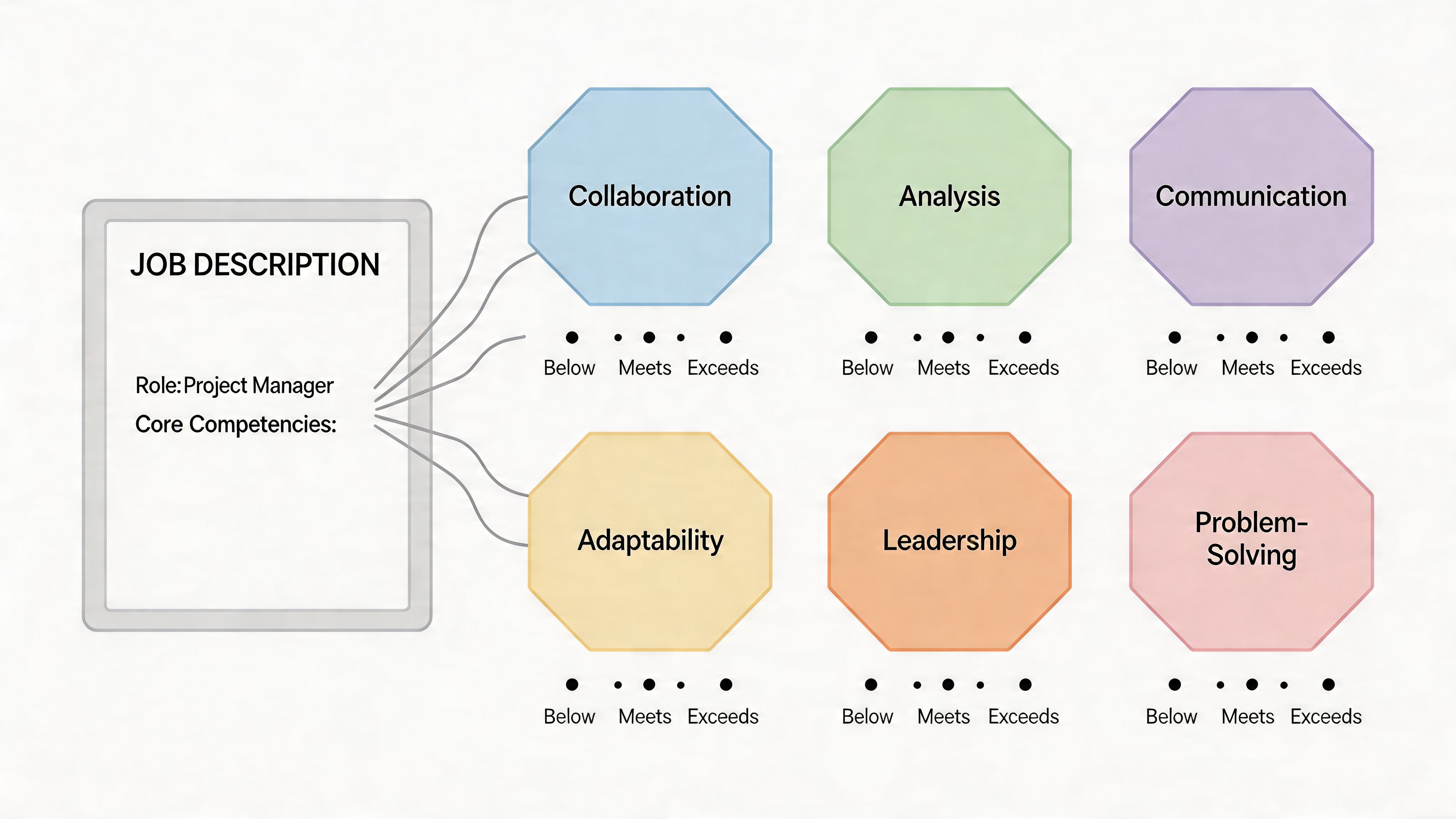
Competency-based interviewing fixes that. You identify the handful of capabilities that matter in the role, then build questions and scorecards around them.
Start with the vital few
The Indeed hiring guide on the Pareto Principle in recruiting makes a useful point. Focus on the “vital few” skills that drive most of the job’s results. That’s a better design principle than trying to cover everything.
For a product manager, your competency list might be:
- Prioritization
- Stakeholder communication
- Analytical judgment
- Execution under ambiguity
For an account executive:
- Discovery
- Objection handling
- Commercial judgment
- Follow-through
For a data scientist:
- Statistical reasoning
- Experiment design
- Business interpretation
- Communication to non-technical audiences
The best skills-based interview questions usually come from this kind of mapping, not from a giant library of generic prompts.
Build one or two questions per competency
Keep the format simple. One competency, one or two questions, one scoring definition.
Example for analytical judgment:
- “Tell me about a decision you made with incomplete data.”
- “How did you validate whether your conclusion was reliable?”
Example for stakeholder communication:
- “Describe a time you had to explain a technical recommendation to a non-technical audience.”
- “What did you change in your message so it would land?”
Use a common rubric:
- Below expectations: misses the core competency
- Meets expectations: demonstrates sound judgment and relevant evidence
- Exceeds expectations: shows strong judgment, adaptation, and measurable impact
This approach is also cleaner from a compliance perspective. The UGESP framework summarized by Yardstick requires job-related selection methods. Competency-based interviews are easier to defend because every question ties directly to the role.
What doesn’t work is calling everything a competency. If your scorecard has twelve categories, interviewers won’t use it well. Keep it focused. If you can’t explain why a competency matters for actual performance, drop it.
4. Voice and Communication Role-Play Questions
Some jobs don’t just require good thinking. They require visible, audible communication under pressure.
That includes sales, consulting, support, product, leadership, and plenty of technical roles. A staff engineer who can’t explain risk to a non-technical VP creates a different kind of hiring problem.
Where role-play gives better signal
Use role-plays when message delivery matters as much as content.
Good prompts include:
- “Explain this architecture decision to a junior engineer.”
- “A customer is upset and wants to cancel. Start the conversation.”
- “Present your recommendation as if I’m the CFO and you have two minutes.”
- “You disagree with the roadmap change. Raise your concerns constructively.”
A written answer won’t tell you enough here. You need to hear whether the candidate can organize a message, adapt to the audience, and stay calm while thinking in real time.
A useful primer on structured behavioral interviewing from Arizona HR’s structured behavioral interviews page supports the broader principle of consistent questions and scoring. Role-play should follow that same discipline. Same prompt, same instructions, same rubric.
Here’s a quick explainer worth embedding for interview teams that need a refresher on structured delivery:
What to score in a communication exercise
- Clarity: Did they get to the point?
- Audience fit: Did they adjust language to the listener?
- Listening: Did they respond to what was said, or just push a script?
- Composure: Could they stay organized under pressure?
- Judgment: Did they choose the right level of detail and tone?
“Clear communication” is too vague to score. Define what good looks like before the interview starts.
One practical note. Asynchronous video can be useful, but it has limits. It captures presentation, not true interaction. For higher-stakes hires, use it as one signal, then verify live. That second step matters because some candidates are polished in recorded responses but less effective in actual back-and-forth conversation.
5. Case Study and Open-Ended Analysis Questions
Case questions are useful when the role involves ambiguity, trade-offs, and imperfect information. That’s why they show up in consulting, finance, operations, strategy, and product hiring.
They’re also easy to misuse.
A strong case doesn’t reward memorized frameworks. It reveals how the candidate structures a messy problem, asks clarifying questions, tests assumptions, and communicates a recommendation.
Good case prompts feel like actual work
Use realistic scenarios.
- Consulting: “A client’s margins are falling. How would you diagnose the issue?”
- Finance: “You’re reviewing a potential acquisition. What do you need to know before recommending yes or no?”
- Product: “Adoption of a core feature is declining. How would you investigate?”
- Operations: “Fulfillment costs are much higher than expected. Where would you look first?”
If you want examples to adapt, these consulting case interview examples can help teams build more role-relevant prompts.
Score the thinking, not just the conclusion
The OPM-style development process summarized by Indeed starts with job analysis and competency identification. That’s exactly how case prompts should be built. A finance case should test financial judgment. A product case should test customer reasoning and prioritization. Don’t pretend one generic business case fits every role.
Use a rubric like this:
- Problem framing: Did they define the issue well?
- Questioning: Did they ask for the right information?
- Analysis: Did they separate signal from noise?
- Recommendation: Was the conclusion coherent and defensible?
- Adaptability: Could they adjust when assumptions changed?
One thing that works very well is the “what if” follow-up. If the candidate recommends cutting costs, ask what they’d do if customer satisfaction dropped. If they recommend entering a market, ask what changes if the sales cycle is longer than expected. Those turns expose whether the candidate understands trade-offs or is just reciting a structure.
What doesn’t work is over-polishing the case. If you spoon-feed all the context, you remove the very thing you’re trying to assess.
6. Motivation and Culture Fit Questions
“Culture fit” is one of the sloppiest phrases in hiring. Too often it means “people like us,” which is not a hiring standard. It’s a bias trap.
Still, motivation matters. Work style matters. The conditions where someone does their best work matter. The trick is to structure those questions around work preferences and values, not personality similarity.
Ask about environment, not likability
Useful prompts include:
- “What kind of work energizes you most?”
- “Tell me about a team environment where you did your best work.”
- “Describe a time priorities changed quickly. How did you handle it?”
- “What kind of feedback helps you improve?”
- “When were you most engaged in a role, and why?”
These questions reveal whether the person wants the kind of work you’re offering. They also help surface friction early. A candidate who wants lots of stability may struggle in a fast-changing startup. A candidate who needs highly collaborative decisions may find a very independent culture frustrating.
Keep this structured and defensible
Common interview advice has a real gap. Most examples stay generic instead of helping teams build role-specific questions tied to real job demands. That’s especially important here. Motivation questions should connect to the reality of the role.
You can score responses against defined dimensions:
- Environment match: aligns with actual pace and ambiguity of the role
- Growth orientation: shows willingness to learn and adapt
- Feedback maturity: can receive correction productively
- Values alignment: supports team standards without demanding sameness
A practical warning. Don’t use this category to override stronger evidence from work samples or structured skill assessment. It’s useful for understanding fit with the environment. It’s weak when used as a vague veto.
Hire for contribution to the team’s way of working, not for personal comfort with the interviewer.
The best structured interview questions examples in this category are honest about trade-offs. If your team moves fast, say so. If priorities shift often, say so. Good candidates don’t need a sales pitch. They need a clear picture.
7. Adaptive Multiple Choice Questions with Dynamic Difficulty
Most multiple choice assessments are either too easy, too gameable, or too disconnected from the actual role. That doesn’t mean the format is useless. It means the design usually is.
Adaptive MCQs are much more helpful when they’re role-specific and used for the right purpose.
Where adaptive questions fit
Use them early in the process to screen for baseline fluency.
They work well for:
- Engineering: data structures, debugging logic, system design principles
- Data science: SQL, probability judgment, experiment design
- Finance: core accounting logic, modeling assumptions, compliance reasoning
- Operations: process trade-offs, root cause analysis, prioritization
The point isn’t to replace interviews. It’s to avoid wasting interview time on candidates who haven’t shown the required fundamentals.
How to use them without making hiring robotic
The strongest setup combines adaptive objective questions with deeper subjective evaluation later. That sequence is especially useful for high-volume pipelines.
The verified background on structured interviews from DataPeople notes that structured interviews with objective scoring rubrics reduce unconscious bias and improve consistency across interviewers. That same principle applies here. If your screening layer is inconsistent, everything downstream gets noisier.
A sound adaptive assessment should be:
- Role-specific: no generic trivia
- Equivalent in difficulty: even if the exact questions vary
- Transparent: candidates should know what’s being measured
- Paired with richer signals: case, role-play, technical work, or behavioral interviews
This format also helps with a very current problem. Static question banks circulate. Candidates memorize them. Some use external tools during remote assessments. Dynamic question generation lowers the value of memorization because the exact item set changes while the skill target stays the same.
What doesn’t work is treating a score as destiny. Adaptive MCQs are great for signal efficiency. They’re poor at measuring communication, judgment under ambiguity, or team interaction. Keep them in their lane.
8. Reference-Based Behavioral Questions with Verifiable Outcomes
Candidates often describe real work in inflated language. That’s normal. The job is to turn broad claims into specific evidence.
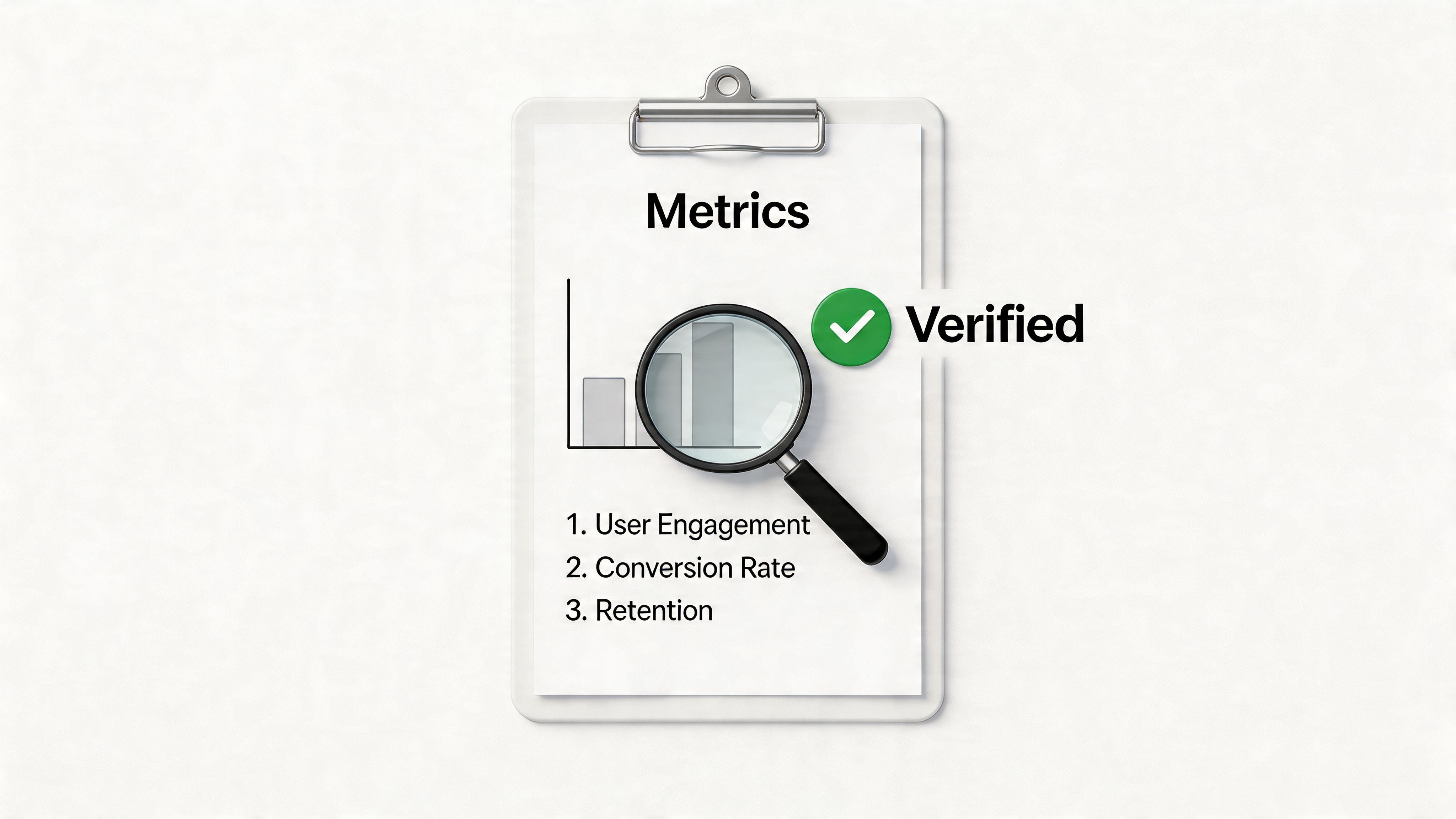
Reference-based behavioral questions help by asking for outcomes in a way that can later be checked against references, work samples, or follow-up questions.
Turn broad claims into testable statements
Instead of accepting “I led a major migration,” ask:
- Scope: “What part did you personally own?”
- Complexity: “What made it difficult?”
- Outcome: “How did you measure success?”
- Verification: “How would your manager describe your contribution?”
Instead of accepting “I improved reporting,” ask:
- Before state: “What wasn’t working?”
- Action: “What changed because of your work?”
- Result: “How did the business use the new reporting?”
- Proof: “Is there a work sample or presentation you can share?”
These are still structured interview questions examples, but they do something extra. They create a trail of facts to validate.
Build a scoring habit around credibility
Use a simple credibility lens:
- Specificity: Are the details concrete?
- Ownership: Is their role clear?
- Consistency: Do details hold up across follow-ups?
- Verifiability: Could a reference or artifact confirm the story?
The Schmidt and Hunter review found that validity rises when structured interviews are combined with cognitive ability tests. You don’t need to treat that as a formula for every role, but the lesson is important. Better hiring comes from combining evidence types, not over-trusting one conversational impression.
This category is especially useful for senior hires. Senior candidates often have broad strategic stories. Your job is to pin down what they shaped, what they decided, and what changed because of them.
For early-career candidates, use the same method with smaller scope. Ask about class projects, internships, volunteer work, or side projects. The absolute scale matters less than the clarity of contribution.
8-Point Comparison of Structured Interview Question Types
| Question Type | Implementation complexity | Resource requirements | Expected outcomes | Ideal use cases | Key advantages |
|---|---|---|---|---|---|
| Behavioral Questions Using the STAR Method | Medium, needs structured question set and interviewer probing skills | Moderate, trained interviewers, time for follow-ups | Predicts behavioral patterns, decision-making, teamwork | Cross-functional roles, leadership, collaborative positions | Standardized, verifiable past behavior, easy candidate comparison |
| Technical Problem-Solving Questions with Real Coding Challenges | High, design fair, role-relevant challenges and anti-cheat measures | High, technical authors, coding platform, reviewers, plagiarism detection | Direct measurement of coding ability, problem-solving process | Software engineering, data science, DevOps, technical PMs | Objective, shows practical skills and coding quality |
| Competency-Based Questions Aligned to Job Requirements | Medium–High, requires competency mapping and rubrics | Moderate, competency framework, scoring rubrics, possible AI tooling | Focused assessment of role-critical competencies | Roles with multiple competency needs; high-volume/higher-stakes hiring | Targeted, consistent, scalable, directly tied to job success |
| Voice and Communication Role-Play Questions | Medium, design realistic scenarios and recording/evaluation flow | Moderate, recording/video tools, evaluators, clear rubrics | Assesses clarity, confidence, empathy, real-time adaptation | Client-facing roles, leadership, stakeholder-facing technical roles | Reveals tone and adaptability; harder to fake than written answers |
| Case Study and Open-Ended Analysis Questions | High, craft realistic, multi-faceted cases and train interviewers | High, case prep, data sets, interviewer time, scoring expertise | Measures analytical rigor, structuring, creativity, business judgment | Consulting, strategy, product management, senior leadership | Tests ambiguity handling and real-world problem-solving depth |
| Motivation and Culture Fit Questions | Low–Medium, define values and focused probes | Low, interviewer guidance and consistent scoring | Predicts retention, engagement, alignment with team norms | Startups, high-growth companies, leadership, team-centric roles | Identifies mission fit and likely long-term engagement |
| Adaptive Multiple Choice Questions with Dynamic Difficulty | High, implement adaptive algorithms and calibrate item response | High, platform, item bank, IRT tuning, QA and localization | Efficient, precise measurement of domain knowledge in less time | Preliminary screening for technical/high-volume roles, global hiring | Fast, objective, reduces false positives/negatives in screening |
| Reference-Based Behavioral Questions with Verifiable Outcomes | Medium, design metric-focused questions and reference process | Moderate, access to references, artifacts, verification time | Validates impact claims and measurable results | Leadership, sales, product, high-impact or senior roles | Outcome-focused, corroboratable, reduces exaggeration |
From Questions to Confidence Your Evidence-Based Hiring Plan
A strong hiring process doesn’t depend on one brilliant interviewer or one magical prompt. It depends on collecting the right evidence, in the right order, with the right level of consistency.
That’s the value behind structured interview questions examples. They make hiring more predictable. They make feedback more useful. They make debriefs less emotional and more grounded in what the candidate showed.
The practical starting point is simple. Pick one role you hire often or one role where mistakes are expensive. Define the few competencies that matter most. Use a small set of structured questions tied to those competencies. Add a rubric before the first interview starts, not after the team has already formed opinions.
A good first pass might look like this:
- Behavioral questions: for past decisions and pattern of execution
- Technical or analytical work sample: for actual skill verification
- Role-play or case exercise: for communication and judgment
- Motivation questions: for environment fit and growth orientation
- Reference-based follow-ups: for credibility and corroboration
That sequence gives you a fuller picture than any resume ever will.
It also creates a better candidate experience. Candidates usually don’t mind being assessed. They mind randomness. They mind being judged on vibes. They mind getting five different interview styles from five different people and then receiving vague feedback. Structured interviews fix a lot of that because expectations are clearer and evaluation is more consistent.
Another advantage is interviewer discipline. Once teams agree on what good looks like, they stop overvaluing charisma and start noticing evidence. They also get better at calibration. A hiring manager, recruiter, and panel interviewer can disagree on enthusiasm and still align on whether a candidate demonstrated strong prioritization, technical judgment, or stakeholder communication.
If you’re documenting interviews carefully, tools like interview transcription software can help teams review what was said instead of relying on rushed notes and memory. That kind of operational support matters more than people admit.
The broader shift in hiring is moving away from static, reusable question banks and toward role-specific verification. That doesn’t mean removing humans from the process. It means using structure where structure improves judgment. Humans are still best at nuance, context, and final decisions. The system should help them see clearly.
For teams hiring at scale, or across technical and business functions, a platform such as Cohesyve can fit naturally into that workflow. The useful idea is not automation for its own sake. It’s dynamic, role-specific assessment that helps you verify skills before the final conversation, then use interviews to probe what still needs confirmation.
Start small. Build one evidence-based interview plan. Keep the questions consistent. Score against defined criteria. Compare candidates on proof, not polish.
That’s when hiring gets calmer. You stop guessing who sounds strong and start seeing who can do the job.
If you want to move beyond resumes and static question banks, Cohesyve is one option to explore. It helps teams generate role-specific assessments and structured interview inputs from a job description, so you can verify skills, judgment, and communication before investing in long interview loops.