Nearly half of TA leaders reported spending more than half their time on work that automation can handle, as noted earlier in the article. That gap explains why recruitment automation tools have moved from a nice-to-have to a hiring operations priority.
The value is simple. Good automation takes repetitive work off your recruiters' plates so they can spend more time interviewing, calibrating with hiring managers, and keeping strong candidates engaged. Admin still matters, but it should not consume the hours that drive hiring quality.
The smarter way to evaluate these tools is by the bottleneck they remove. Some products automate sourcing. Some reduce screening volume. Others handle scheduling, CRM follow-up, or skill verification. A platform like LinkedIn Recruiter helps teams find talent, but sourcing is only one part of the funnel.
That distinction matters in practice.
A team buried in inbound applicants needs different automation than a team struggling to book interviews or re-engage past candidates. If resume volume is the problem, assessment-driven screening tools such as Cohesyve can cut noise early. If recruiters are losing hours to coordination, scheduling automation will produce a faster return. If outbound response rates are weak, sourcing and CRM automation deserve attention first.
This guide is organized around those core functions so you can choose the right tool for the constraint you have, not the longest feature list.
1. Cohesyve
Disclosure: Cohesyve publishes this blog. This entry sticks to what the product does today.
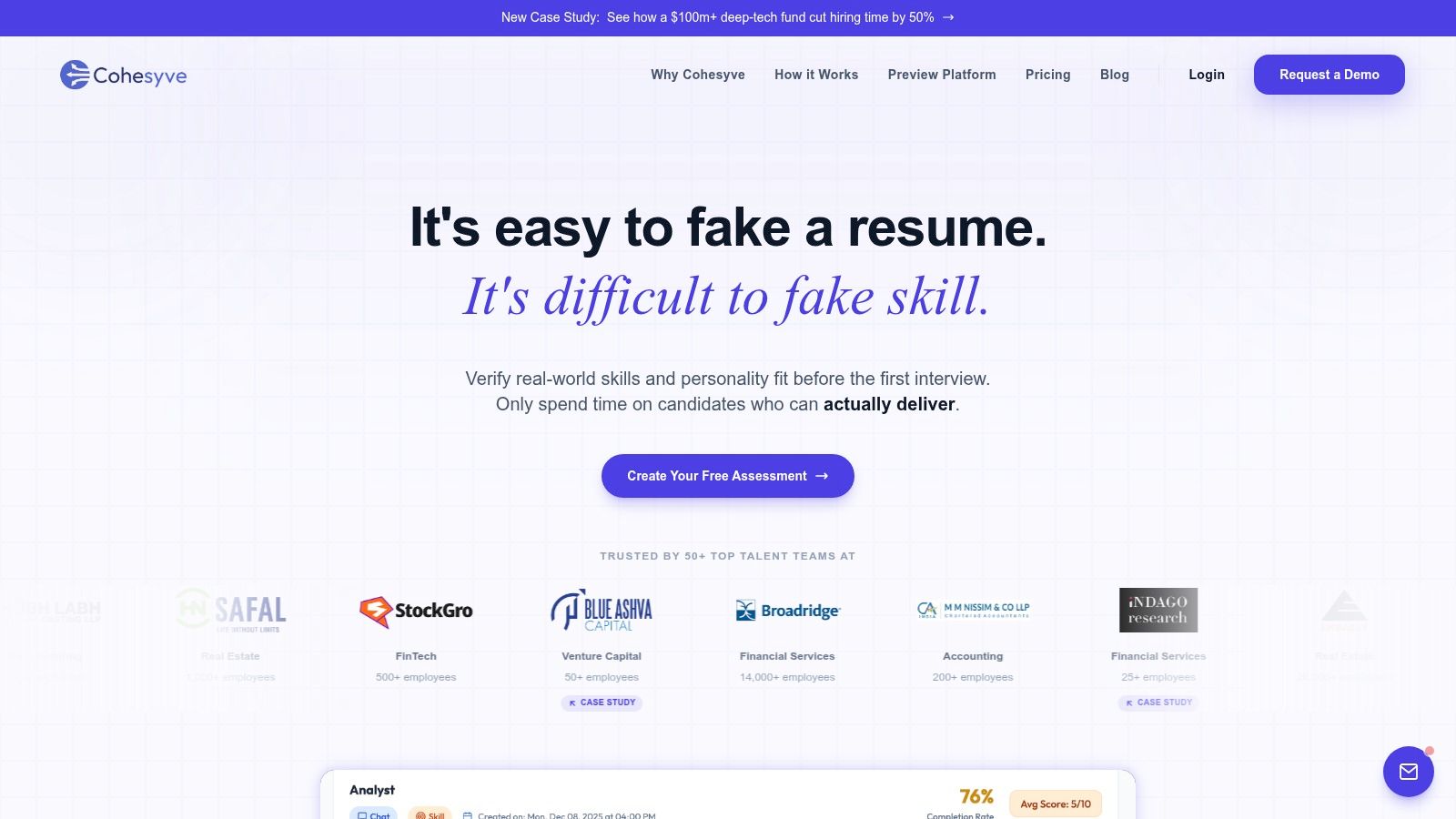
Cohesyve is the tool I’d put in front of teams that are buried in resumes but still don't trust the shortlist. That’s a common problem. A polished CV tells you who can write a polished CV. It doesn't reliably tell you who can do the work.
Cohesyve takes a different route. You paste in a job description, the platform builds a role-specific candidate profile, and it generates an adaptive assessment built around the actual job. The practical shift is simple: instead of screening for signals around skill, you screen for demonstrated skill.
Where it earns its place
This matters most when your interview funnel is bloated. Cohesyve uses one-of-a-kind assessments instead of static question banks, which reduces the usual problems with repeated prompts, leaked answers, and candidates optimizing for test familiarity instead of job readiness. It supports nine formats: coding tasks, spreadsheet tasks, email replies, chart analysis, chat simulations, critiques of flawed work, voice role-plays, multiple choice and written answers.
It also covers a wider set of functions than many assessment tools. Engineering is the obvious use case, but finance, consulting, operations, analytics, and marketing teams can use the same system without forcing every role into the same template.
Practical rule: If your recruiters keep saying, “We’re interviewing too many people just to find one credible finalist,” your bottleneck probably isn't sourcing. It's verification.
A few specifics stand out:
- Role-specific by default: The platform generates assessments from the job description instead of making teams build every test manually.
- Cheating resistance: Dynamic assessments are harder to game than static banks, especially when each candidate gets a different mix.
- Global utility: Candidates can take it in 18 languages, which matters for distributed teams and regional hiring consistency.
- Simple invites: Candidates are invited by email, spreadsheet upload, public link or QR code.
Trade-offs and pricing
Cohesyve is not a replacement for final-round interviews, panel discussions, or executive evaluation. It works best as an early and mid-funnel filter that gives hiring teams stronger evidence before they invest interview time.
It’s also only as good as the role definition behind it. If the job description is vague, the evaluation signal weakens. For highly regulated or unusually niche roles, teams may still want bespoke add-ons or extra security layers.
Pricing is published. Plans are sized to how many candidates you assess a year, from $199 a month billed annually, and unused credits roll over while you're subscribed. A free trial covers 10 candidates or 14 days, with no card.
- Website: Cohesyve hiring platform
2. Ashby
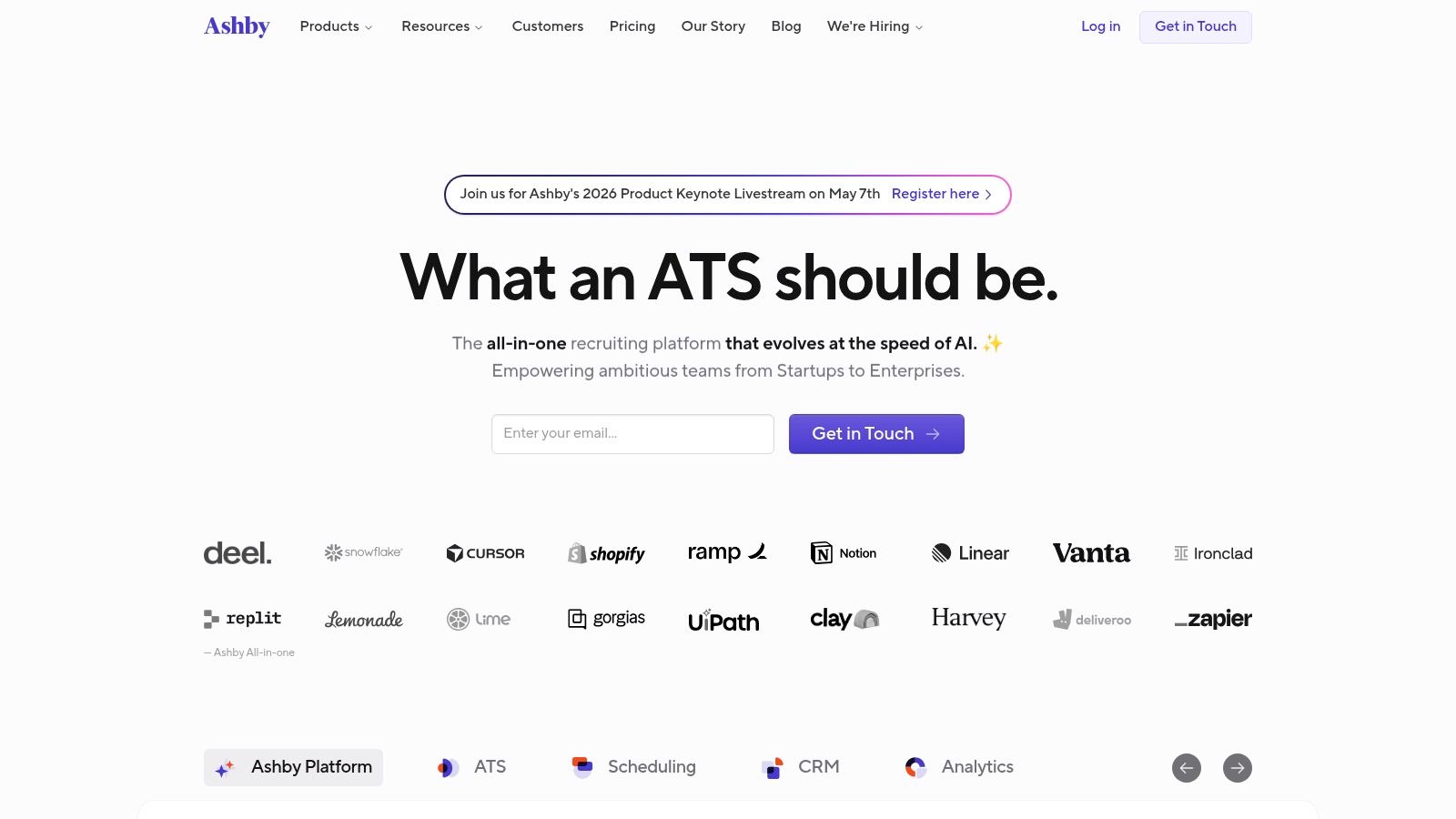
Ashby is the choice for teams that want fewer moving parts. Instead of buying an ATS, then adding a scheduling tool, then adding CRM, then layering notes and analytics on top, Ashby tries to keep the core workflow in one place.
That has a real operational benefit. Automation works better when candidate data, interview stages, communication history, and scheduling logic sit in the same system. Context gets lost fast when you spread the process across too many tools.
Best fit
Ashby is strongest when your pain is process orchestration. Interview plan automations can trigger emails, questionnaires, assessments, and availability links based on stage. Native texting helps with candidate communication, and the AI Notetaker can record, transcribe, summarize, and support interviewer feedback.
What I like is that the automation isn't bolted on. It sits inside the day-to-day recruiting workflow, which improves the odds your team puts it to use.
The best automation usually isn't the flashiest feature. It's the feature recruiters stop noticing because it quietly removes ten small tasks every day.
A few trade-offs are worth saying plainly:
- Strong upside: Built-in automation across ATS, scheduling, and notes reduces manual work without forcing a multi-vendor stack.
- Good for debriefs: AI tied to candidate context can make feedback loops cleaner and faster.
- Less ideal for cautious buyers: Pricing isn't public, so evaluation usually starts with a sales process.
- Requires adoption discipline: If you're moving from a legacy ATS or spreadsheet-heavy process, change management still matters.
Ashby makes the most sense for teams that want a modern operating system for recruiting, not just a place to store applicants.
- Website: Ashby recruiting software
Cohesyve
See what candidates can do before you interview them
Cohesyve turns your job description into a role-specific assessment with a scoring rubric. Each candidate gets a different version, so questions cannot be shared. Ten candidates free, no card.
3. Greenhouse
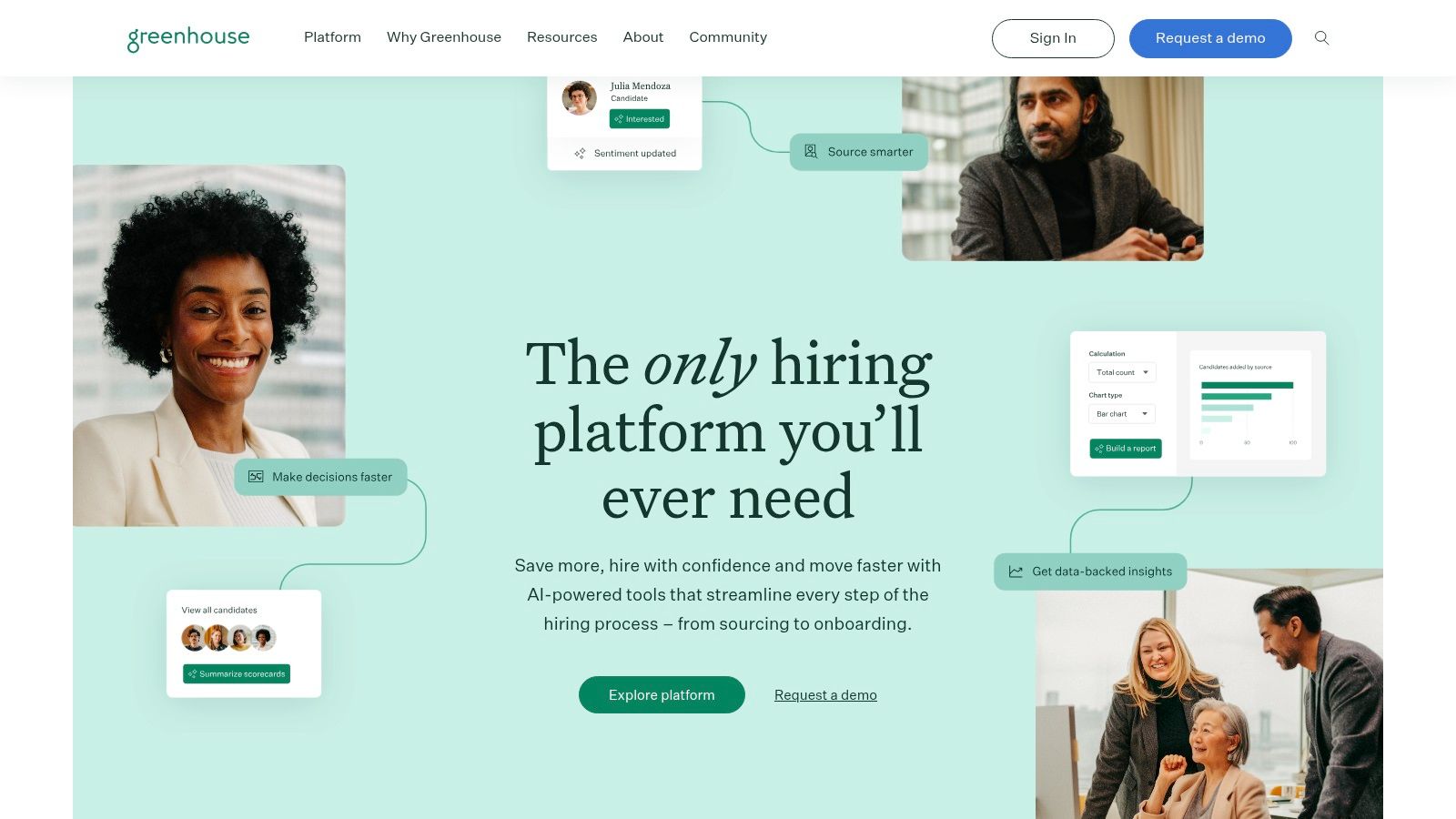
Greenhouse fits teams that need automation inside a structured hiring process, not teams looking for a loose, sourcing-first system. Its strength is operational control. Recruiters, hiring managers, and interviewers can move through a defined workflow without as much chasing, manual coordination, or process drift.
That matters most in larger organizations, but it also matters in fast-scaling companies that want consistency before hiring volume gets messy.
Where Greenhouse fits in an automation stack
In this list, Greenhouse sits firmly in the all-in-one ATS category. It automates core recruiting operations such as interview scheduling support, reminders, permissions, approvals, and stage-based workflow management. The value is less about flashy AI and more about making sure the process runs the same way across teams.
That distinction is useful during evaluation. If your biggest bottleneck is governance, interviewer discipline, or cross-functional coordination, Greenhouse is usually a stronger fit than a specialized point tool. If your bottleneck is top-of-funnel sourcing or skill verification, you may still need to pair it with other software. This recruitment software comparison across ATS and broader hiring platforms helps clarify that category split before you start booking demos.
What works and what to watch
Greenhouse earns its place because it handles complexity well. Multi-team hiring, approvals, role permissions, and standardized interview processes are easier to manage when the ATS is built for structure from the start.
There are trade-offs.
- Strong fit for structured hiring: Configurable workflows and mature integrations help teams keep process quality high as headcount grows.
- Useful automation, not flashy automation: Scheduling support, reminders, and workflow controls cut admin time, but Greenhouse is not the tool I’d pick for advanced outbound nurture.
- Admin ownership matters: Setup can get complex, especially if different business units want different workflows.
- Often part of a broader stack: Teams that need stronger sourcing, CRM-style outreach, or technical skill assessment often add specialized tools around it.
Greenhouse makes sense as the foundation when your main hiring problem is consistency at scale. It is less compelling if you want one tool to handle every part of recruitment automation equally well.
- Website: Greenhouse recruiting platform
4. Lever
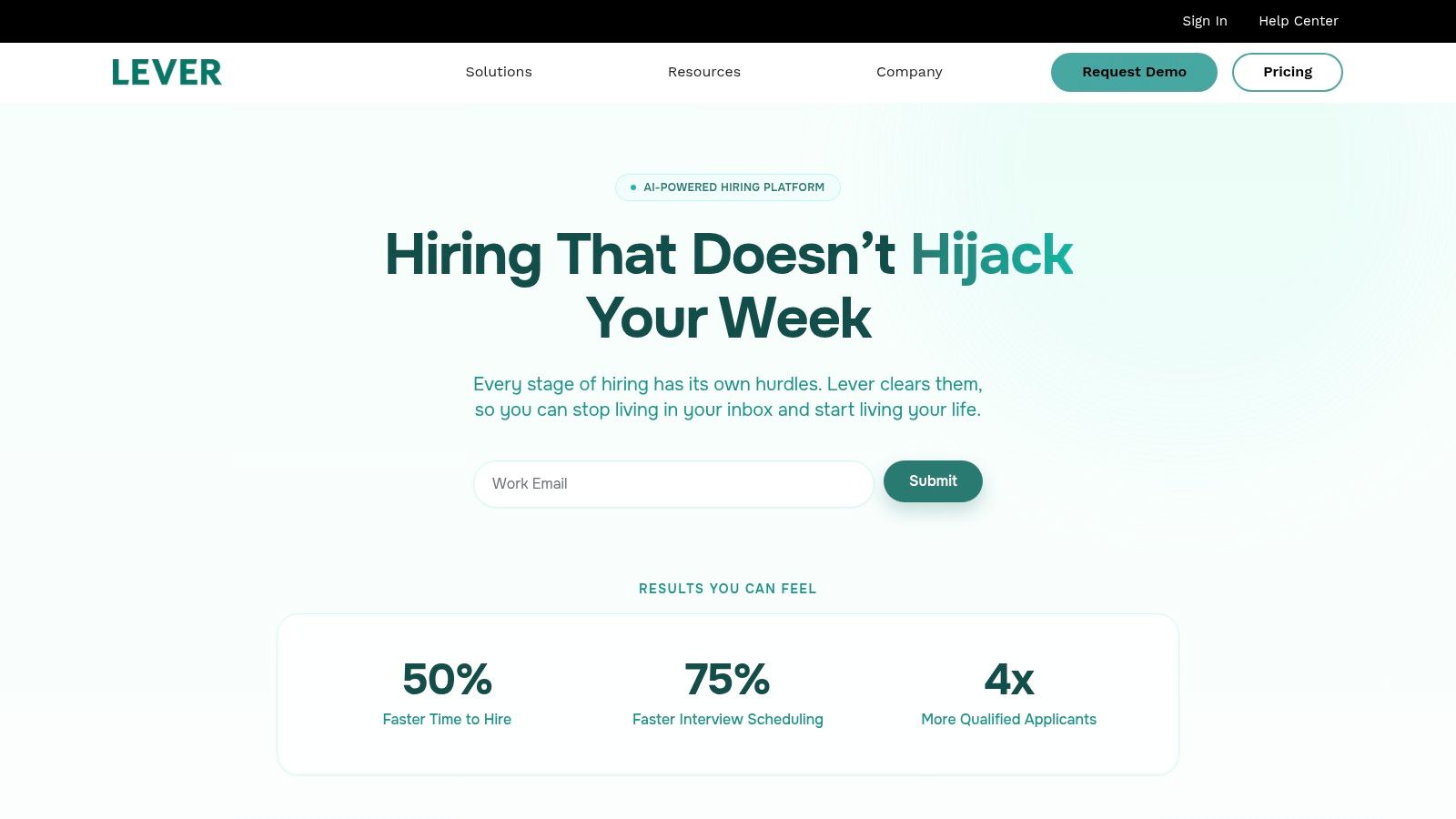
LeverTRM works best when sourcing and hiring need to feel like one motion instead of two disconnected systems. Some platforms are fine once a candidate applies, but weak before that point. Lever is better than most at connecting outbound engagement with downstream hiring flow.
That’s useful for teams that recruit like marketers. If you run nurture campaigns, text candidates, re-engage silver medalists, or want stop-on-reply logic in multi-step outreach, Lever gives you more flexibility than a plain ATS.
Where Lever shines
Its Automation Hub helps teams trigger stage-based actions and stakeholder communication. Multi-step nurture sequences are the feature I’d call out first. They help recruiting teams stay in touch with hard-to-close or passive talent without manually running every follow-up.
There’s also a practical stack benefit. A unified ATS plus CRM means less duplicated data and fewer handoffs between sourcing and hiring.
If you're sorting through category differences, this recruitment software comparison is a useful reference point when deciding whether you want an ATS-first platform or something broader.
- Best for: Teams that care about candidate nurture, outreach sequencing, and texting.
- Less ideal for: Buyers who want all advanced automation included in a base package.
- Operational reality: Pricing is not published, and some stronger workflows depend on add-ons.
Lever is a good middle path. Not as rigid as some enterprise ATS platforms, not as narrow as a sourcing tool, and not pretending one workflow fits every company.
- Website: LeverTRM recruiting software
5. SmartRecruiters
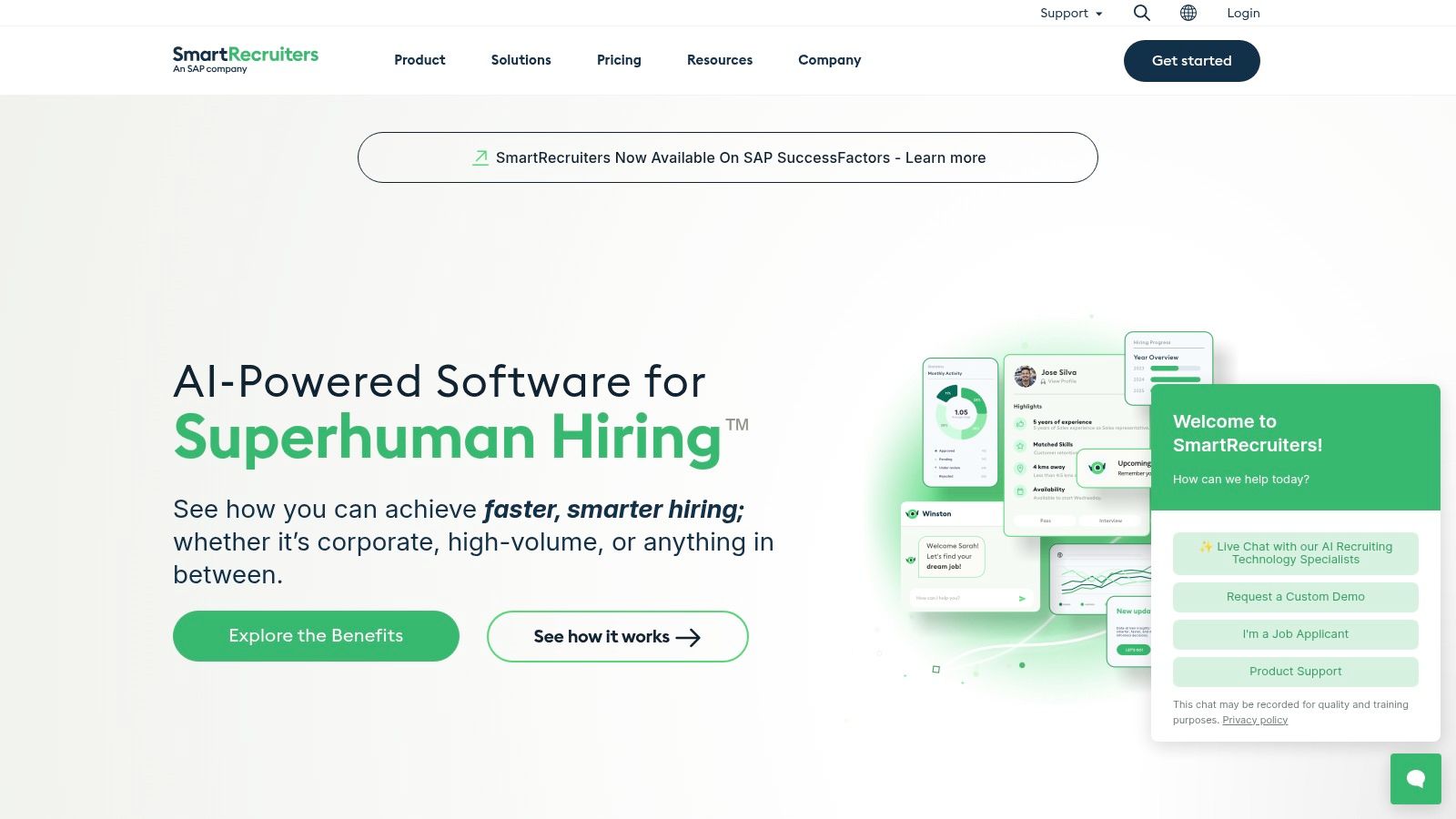
SmartRecruiters is built for teams that want an end-to-end suite and expect the product to keep evolving. Some platforms feel stable but static. SmartRecruiters tends to appeal more to companies that want ongoing improvements in automation, AI features, and high-volume workflow support.
The strongest use case is hiring at pace. Dynamic scheduling, bulk self-scheduling, conversational screening, and AI copilots help recruiters move candidates through the process without turning every stage into manual coordination.
Practical trade-offs
The appeal is clear if you're handling repeated hiring cycles across business units. Packages often include CRM, SMS, and job distribution, which can cut down on separate tool sprawl. That matters because fragmented stacks usually look cheaper before implementation and messier after.
At the same time, advanced AI and high-volume features often sit in higher tiers. So the value depends on whether your team will use those capabilities, not just whether they look good in a demo.
Buy for your hiring pattern, not your aspiration. A platform designed for constant volume can feel heavy if your actual demand is uneven.
SmartRecruiters is a sensible pick for companies that need automation breadth and can support a more involved rollout.
6. iCIMS Talent Cloud
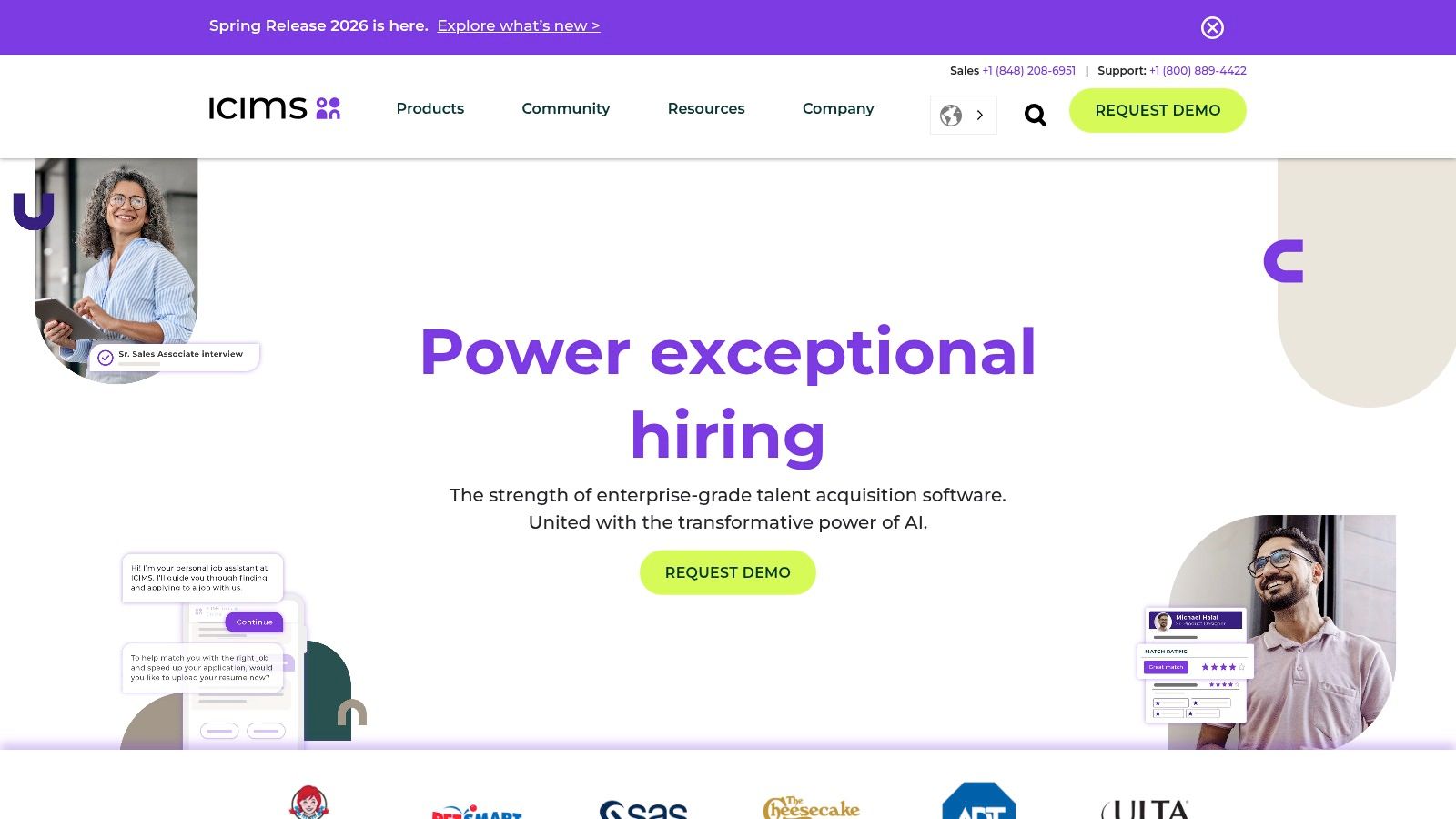
Large companies rarely buy recruiting software for one feature. They buy for control, consistency, and the ability to run hiring across regions, business units, and compliance requirements without rebuilding the process every quarter.
That is where iCIMS fits best. It is an enterprise recruiting system built to automate repeatable operational work across candidate engagement, interview scheduling, onboarding flows, internal mobility, and AI-assisted matching. The value is not novelty. The value is putting one system in place that multiple stakeholders can agree to use.
In this guide’s framework, iCIMS sits in the all-in-one ATS category. It makes the most sense when your bottleneck is not sourcing alone or screening alone, but coordination across a large hiring organization. If you are still comparing platform ATS tools with more specialized AI layers, this breakdown of AI-powered recruitment tools by automation function is a useful cross-check.
When it makes sense
iCIMS is usually an infrastructure decision. Teams choose it when TA, HRIS, IT, procurement, and legal all need standard workflows, reporting discipline, and integration options that will hold up over time.
The trade-off is straightforward. You get enterprise depth, but you also take on a more involved implementation, a longer buying cycle, and more pressure to define ownership early. If no one owns workflow design, permissions, and data hygiene, a large platform will expose that fast.
- Strengths: Enterprise-grade workflow coverage, a large integration ecosystem, and strong fit for standardized hiring across complex organizations.
- Watchouts: Sales-led pricing, longer time to value, and more internal coordination during rollout.
- Best use case: Enterprises that need one core recruiting platform to support multiple teams and hiring processes, rather than stitching together separate tools.
iCIMS is rarely the fastest product to stand up. For large organizations that need scale, governance, and fewer process exceptions, it is often one of the easier platforms to defend in a serious buying process.
- Website: iCIMS Talent Cloud
7. Eightfold AI
Eightfold AI is the platform I’d look at if your biggest issue isn't applicant flow. It’s talent intelligence. Specifically, finding better matches inside a messy mix of existing candidates, internal talent, and new prospects.
The platform leans heavily into skills-based matching, talent rediscovery, multi-step automation, and enterprise-scale AI workflows. That approach lines up with a big shift in hiring. In 2025, 85% of companies had adopted skills-based hiring, according to Hired AI App’s skills-based hiring data.
Where it fits in a stack
Eightfold often works best alongside an existing ATS, not necessarily instead of one. That makes it useful for companies that don't want to rip out their current system but do want stronger AI matching and rediscovery.
Its strength is not just sourcing new people. It’s resurfacing candidates and employees who already exist in your data but are easy to miss in traditional ATS search.
If you’re evaluating this category more broadly, this roundup of AI-powered recruitment tools helps frame where talent intelligence platforms differ from workflow-first ATS tools.
- Strongest capability: Skills intelligence and rediscovery at scale.
- Main challenge: It needs good data and careful integration planning.
- Commercial reality: Pricing is enterprise-oriented and usually custom.
Eightfold is valuable when your talent problem is hidden in the system, not absent from the market.
- Website: Eightfold AI talent platform
8. Paradox
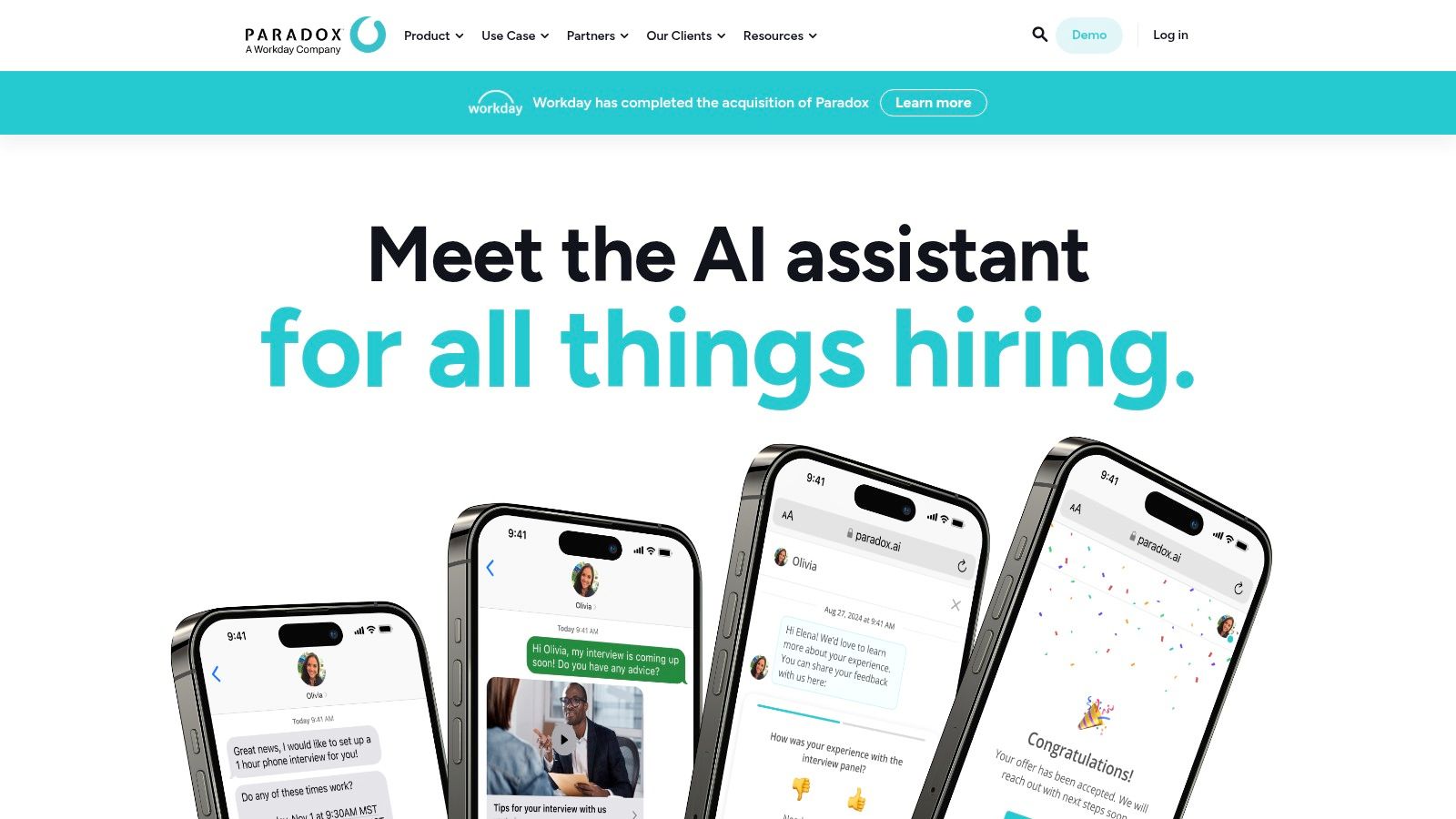
Paradox is a specialist. It’s not trying to be the best at every part of recruiting. It’s trying to remove friction in high-volume hiring, especially for mobile-first candidates who need a fast, simple path from interest to interview.
That’s where Olivia, its conversational AI assistant, stands out. Chat-based screening, text-to-apply flows, instant scheduling, reminders, FAQs, offers, and onboarding all fit naturally in hiring environments where speed and responsiveness matter more than long-form candidate journeys.
Best use case
Paradox is most effective in hourly, frontline, retail, hospitality, and similar hiring models. For those teams, candidate drop-off often comes from unnecessary friction. A text conversation beats a slow portal every time.
This is not the tool I’d choose for executive hiring or specialized knowledge roles where nuanced screening matters more than speed at the first touch. But for high-volume workflows, it solves a very real operational problem.
Good automation removes waiting. Bad automation just moves the waiting to a different stage.
Paradox is easy to understand once you know your hiring model. If you're hiring at scale and candidates live on their phones, it makes sense. If not, it probably doesn't.
9. hireEZ
hireEZ is built for the top of funnel. If your team says, “We don’t have enough qualified people to even start,” this is the kind of platform worth a serious look.
Its core value is outbound sourcing and engagement. Semantic search, AI-assisted outreach, and broad public profile coverage help recruiters find and contact candidates faster than they can with manual search alone. The platform is especially useful when inbound application flow is weak or too generic.
What to expect
I’d use hireEZ when speed of discovery matters more than downstream workflow management. It’s not trying to be the whole recruiting stack. It’s trying to make the sourcing team faster and more effective.
That also means it usually works best paired with a capable ATS. Once the reply comes in, you still need a reliable process for evaluation, coordination, and decision-making.
A few clear pros and cons:
- Best at: Outbound sourcing, profile coverage, and reducing manual follow-up.
- Less strong at: Full pipeline management after the first stages.
- Good buyer fit: Teams with dedicated sourcing motion, especially in competitive labor markets.
hireEZ is a practical answer to a narrow problem. That's not a criticism. Narrow tools are often the right answer when the bottleneck is obvious.
- Website: hireEZ sourcing platform
10. Gem
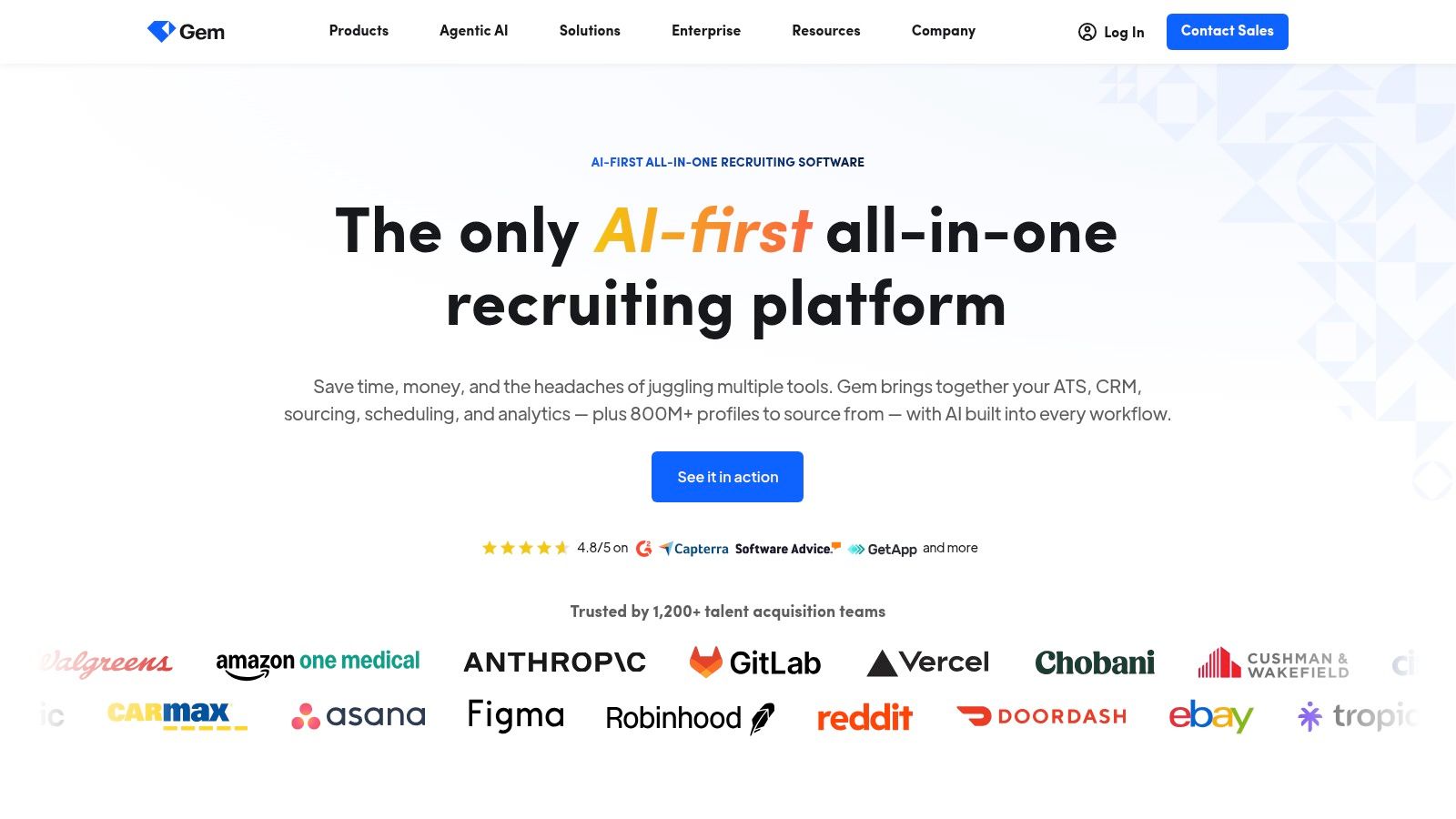
Gem is one of the more versatile recruitment automation tools on this list because it tries to consolidate the top of funnel without ignoring the rest. It combines sourcing, CRM, scheduling, analytics, and optional ATS capabilities in a way that appeals to growing teams trying to reduce tool sprawl.
The recruiting software market is estimated at US$ 3.62 billion in 2026 and projected to reach US$ 6.87 billion by 2033, according to Coherent Market Insights on recruitment software. Gem makes sense in that broader shift toward consolidated recruiting systems that connect sourcing, engagement, and reporting.
Why teams choose it
Gem is particularly good at rediscovery and nurture. If your talent database is full of strong past candidates who went cold, the platform helps bring them back into active consideration. It also offers AI-personalized outreach and scheduling support, which can save recruiters from bouncing between browser tabs and separate tools.
The ATS integrations matter too. Two-way sync with platforms like Greenhouse, Workday, and Lever helps reduce the usual mess where sourcing data lives in one place and hiring decisions live somewhere else.
- What stands out: Consolidation across sourcing, CRM, scheduling, and analytics.
- What to watch: Advanced modules often come as add-ons, and larger teams usually end up in custom packaging.
- Who gets the most from it: Teams that want stronger top-of-funnel automation without building a patchwork stack.
Gem is strongest when your hiring motion depends on outreach, rediscovery, and talent community management, not just inbound applicants.
- Website: Gem recruiting platform
Top 10 Recruitment Automation Tools: Feature Comparison
Teams rarely need the same kind of automation. Some need a system to run the whole hiring process. Others need a sharper tool for one bottleneck, like sourcing, screening, or interview scheduling. Read the table that way. It is less useful as a generic feature checklist and more useful as a map of what each platform automates best.
| Product | Core automation function | Candidate experience and quality | Best for | Key differentiator and pricing |
|---|---|---|---|---|
| Cohesyve (our product) | AI-generated, role-specific adaptive assessments with 9 task types, including coding, spreadsheets, simulations and voice | High-interaction assessments that keep candidates engaged, reduce cheating, and produce ranked results quickly | Teams that need direct skill verification across technical and non-technical roles | Real work-sample assessment. Plans from $199/month billed annually, plus a free trial for 10 candidates |
| Ashby | ATS and CRM automation with interview plans, scheduling, and AI Notetaker | Smooth scheduling and AI summaries that help debriefs move faster. More efficient interviewer experience | Small and mid-sized teams that want one system instead of several point tools | Context-aware AI tied to candidate records. Pricing is sales-led |
| Greenhouse | Structured hiring workflows, scheduling, and sourcing automation inside an enterprise ATS | Consistent interview flows and stronger process control at scale | Mid-market and enterprise teams that need governance and repeatability | Large integration ecosystem and mature hiring workflows. Custom pricing |
| Lever (LeverTRM) | ATS plus CRM automation with nurture sequences and candidate texting | Better candidate follow-up for teams running outbound-heavy hiring motions | Teams that rely on sourcing and ongoing engagement, not just inbound applicants | Recruiting CRM functionality is built into the core product. Advanced workflows often require add-ons. Sales-led pricing |
| SmartRecruiters | AI-driven recruiting suite with dynamic scheduling, bulk self-scheduling, and copilots | Faster scheduling and conversational screening for high-application environments | High-volume hiring teams | Strong scheduling automation for scale. Advanced functionality is usually reserved for higher tiers |
| iCIMS Talent Cloud | Enterprise recruiting suite covering engagement, onboarding, and AI matching | Mobile-first communication and scheduling with a strong compliance orientation | Large organizations standardizing recruiting across regions or business units | Broad enterprise integrations and compliance support. Pricing is sales-led, and rollouts can take longer |
| Eightfold AI | Talent intelligence for sourcing, matching, and rediscovery across large datasets | Skills-based matching can improve relevance, but results depend heavily on data quality | Enterprises that want an AI layer across existing talent systems | Strong internal mobility and rediscovery capabilities. Enterprise pricing and cleaner data requirements |
| Paradox (Olivia) | Conversational automation for apply, screen, schedule, and offer steps | Mobile-first chat experience that can lift completion rates in hourly hiring | Frontline, hourly, and other high-volume hiring teams | Built specifically for conversational recruiting workflows. Sales-led pricing |
| hireEZ (Hiretual) | Outbound sourcing automation with semantic search and AI-assisted engagement | Faster candidate discovery and more automated outreach at the top of the funnel | Sourcers and recruiting teams trying to scale proactive outreach | Strong search and always-on engagement support. Works best alongside an ATS. Sales-led pricing |
| Gem | Sourcing, CRM, scheduling, and analytics for top-of-funnel recruiting | Easy candidate capture, nurture campaigns, and scheduling in one workflow | Teams consolidating sourcing and talent engagement tools | Strong two-way ATS integrations and talent rediscovery. Advanced modules are often priced separately |
A practical way to compare these tools is by the hiring failure they fix.
If the problem is weak candidate quality, platforms built around skill verification and structured assessment deserve more weight than another sourcing dashboard. If the problem is recruiter capacity, ATS and CRM systems with scheduling, note capture, and workflow automation usually create the bigger gain. If the problem is pipeline volume, sourcing and conversational tools tend to matter more than deep workflow configuration.
That trade-off shows up in buying decisions all the time. Broad platforms reduce tool switching and reporting gaps, but they can be slower to implement and harder to tailor around one urgent pain point. Specialist tools can solve a narrow problem fast, but they also add integration work and another system your team has to maintain.
Mistakes to Avoid When Automating Your Hiring
Most automation mistakes don't come from moving too slowly. They come from automating the wrong thing first.
- Automating convenience, then judgment. Scheduling, reminders and status updates are easy wins, so start there. The trouble starts when the next step is ranking candidates on whatever the system reads fastest: résumés, titles, keywords and degrees. The funnel looks cleaner without getting more accurate.
- Losing strong candidates in rigid filters. People get screened out for a missing keyword, an unfamiliar school or an unusual career path, none of which says whether they can do the work.
- Over-automating the candidate experience. Use automation for coordination, and keep a person on the conversations that shape a candidate's confidence, especially with finalists.
- Skipping team buy-in. Show recruiters and hiring managers what the system evaluates and what it doesn't, and let them challenge its rankings.
Metrics Worth Tracking
- Quality of the shortlist: would hiring managers seriously hire the people on the first slate?
- Assessment-to-interview conversion: are candidates who show job-relevant skill advancing, or are polished résumés still winning?
- Offer acceptance: weak acceptance usually points to the candidate experience or to how the role was calibrated.
- Diversity of shortlisted candidates: does the funnel open up as you rely less on pedigree filters?
- Recruiter time recovered: hours taken out of scheduling and admin, and whether they go back into calibration and closing.
Don't let time to hire become the headline metric if quality is flat or falling. A faster bad decision is still a bad decision.
Choosing Your Stack A Practical Framework
Stack decisions usually fail for one reason. Teams buy for feature breadth before they identify the hiring bottleneck.
A better approach is to sort tools by the job the automation is doing. Start there, then decide whether you need one system of record, one specialist layer, or both.
The first question is simple. Where does your process break?
If recruiters struggle to build pipeline, focus on sourcing automation. If pipeline exists but interview quality is inconsistent, focus on screening and verification. If finalists are strong and offers still move slowly, the problem is usually scheduling, approvals, handoffs, or hiring manager response time.
That distinction matters because these categories solve different problems:
- Sourcing bottleneck: hireEZ and Gem reduce manual search, outreach, and rediscovery work at the top of the funnel.
- Process bottleneck: Ashby, Greenhouse, Lever, SmartRecruiters, and iCIMS do more to standardize workflows, centralize feedback, and keep interviews moving.
- Quality bottleneck: assessment and skill verification tools deserve more weight than another database of candidates.
I see teams get this wrong all the time. They try to fix weak candidate quality by adding more sourcing volume, or they buy a large ATS when the problem is that nobody has a reliable way to separate promising resumes from proven ability. More automation in the wrong part of the funnel just helps you process noise faster.
That is why stack design should follow evidence quality, recruiter capacity, and implementation reality.
For a lean team with one clear pain point, a specialist tool can be the faster win. For a larger team dealing with fragmented workflows, duplicate data, and messy reporting, consolidation usually creates more value even if rollout takes longer. The trade-off is real. Broad platforms reduce switching costs and reporting gaps, but configuration takes time. Point solutions solve one problem quickly, but they add another integration, another vendor, and another workflow to maintain.
A practical buying sequence looks like this:
- Name the bottleneck in one sentence. "We cannot source enough qualified engineers" is useful. "We need better recruiting tech" is not.
- Map the automation to that bottleneck. Choose sourcing, screening, scheduling, or workflow tools based on the failure point.
- Check the operating cost. Include implementation time, admin ownership, integrations, recruiter training, and hiring manager adoption.
- Measure workflow relief, not feature count. Fewer manual steps, faster handoffs, and better candidate signal are the metrics that matter.
- Keep decision points visible. Automation should support recruiter and hiring manager judgment, especially at screening and selection stages.
The strongest stacks are rarely the biggest. They are the ones that remove repetitive work without hiding weak process design.
If your main issue is too many resumes and too little proof of ability, Cohesyve is worth testing. It helps teams verify practical skills earlier, rank candidates with clearer evidence, and use interview time on people who have already shown relevant capability.